
Compare neighborhoods · See five hotel examples
Choosing where to stay in Paris starts with your plans, not an arrondissement number. For a first trip of three to five nights, start with Le Marais for neighborhood walks and lively evenings, Saint-Germain-des-Prés for a café-and-culture stay, or the Latin Quarter for a practical Left Bank base. Louvre–Palais-Royal and Opéra–Grands Boulevards are useful alternatives when sightseeing or transport takes priority.
Shortlist two or three areas, then compare actual hotel addresses for walking routes, useful stations, noise, terrain, and total cost. A good address in your second-choice neighborhood can suit you better than an awkward one in your favorite.
Start Here: The Short Answer
- Le Marais: Start here for central walks, shops, and evening activity; check the particular street for bars and noise.
- Saint-Germain-des-Prés: Consider it for galleries, cafés, and Left Bank walks; compare the room and price carefully.
- Latin Quarter: A useful starting point for the Panthéon, the Seine, and a CDG connection near an RER B station.
- Louvre–Palais-Royal: Consider it when the Louvre, Tuileries, and central sightseeing anchor your visit.
- Opéra–Grands Boulevards: Look here for several transport options and shopping; identify which station is actually near the hotel.
The Eiffel Tower area and Montmartre can also work. Choose them because their location fits your trip, with the walking and transport trade-offs understood.
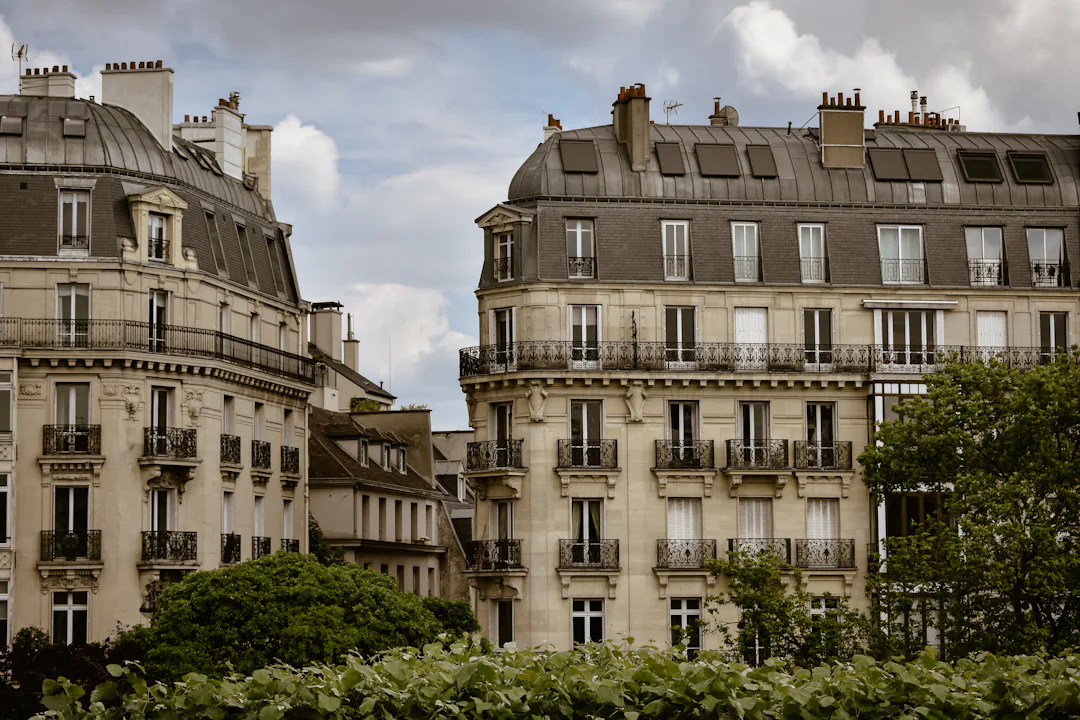
Jump to
Paris Neighborhood Comparison at a Glance
Start with the three-column guide below. Follow an area link for its full review, or open the detailed comparison for transport, terrain, noise and price context.
| Area | Best starting point for | Check before booking |
|---|---|---|
| Le Marais | Walks and lively evenings | Bar noise on the exact street |
| Saint-Germain-des-Prés | Cafés and culture | Room quality versus price |
| Latin Quarter | A practical Left Bank base | Distance to RER B and slopes |
| Louvre / Palais-Royal | Louvre and central sightseeing | Routes to your other sights |
| Opéra / Grands Boulevards | Transport and shopping | Nearest useful station |
| Eiffel Tower / Invalides | Western Left Bank plans | Travel to eastern sights |
| Montmartre | Hilltop neighborhood atmosphere | Hills, steps and daily travel |
| Selected outer areas | Room fit or possible value | Savings versus daily routes |
Full comparison: transport, walking, noise and prices
Use this table as a shortlist, not a ranking. Walking and evening descriptions are editorial guidance, not measured travel times or noise scores. Price tendencies are broad indications informed by the Paris tourist office accommodation directory, not live quotes. Compare the same dates and room requirements.
Scroll horizontally to see all columns.
| Area | Bank / arrondissement | Best for | Walking access | Transport examples | Evening character | Terrain | Noise to check | Price tendency | Main trade-off |
|---|---|---|---|---|---|---|---|---|---|
| Le Marais | Right / mainly 3rd–4th | Walks and evening life | Historic center and river; address matters | Saint-Paul: 1; eastern edge: 8 | Restaurants and bars | Check paving and route | Bars, deliveries, busy streets | Mid to high | Lively location may conflict with quiet-room needs |
| Saint-Germain-des-Prés | Left / mainly 6th | Cafés and culture | Seine and nearby Left Bank sights | Saint-Germain: 4; Odéon: 4/10 | Cafés and dining | Slopes toward Luxembourg | Boulevards and restaurant streets | High | Central atmosphere can carry a premium |
| Latin Quarter | Left / mainly 5th | Left Bank sightseeing | Notre-Dame, Panthéon, gardens; spread out | Saint-Michel–Notre-Dame/Luxembourg: RER B; 10 locally | Lively restaurant pockets | Slopes around Panthéon | Café streets and traffic | Mid, with wide variation | Not every address is close to RER B |
| Louvre / Palais-Royal | Right / 1st | Central sightseeing | Louvre and Tuileries cluster | Palais Royal: 1; nearby Pyramides: 14 | Varies toward Les Halles | Check exact walking route | Busy visitor routes | High | Central does not mean every sight is walkable |
| Opéra / Grands Boulevards | Right / 9th and adjacent streets | Connections and shopping | Opéra and department stores | Opéra: 3/7/8; Grands Boulevards: 8/9 | Dining, theaters, commercial streets | Varies toward northern streets | Boulevards and nightlife | Mid to high | Broad area label hides different station access |
| Eiffel Tower / Invalides | Left / 7th | Western Left Bank plans | Strongest for the local cluster | École Militaire/Invalides: 8; Invalides: RER C | Depends on the block | Long walking routes to test | Visitor areas and roads | High | Longer trips to some central/eastern sights |
| Montmartre | Right / 18th | Hilltop neighborhood atmosphere | Local sights; transit for other clusters | Abbesses: 12; Anvers: 2 | Bars and busy visitor pockets | Hills, steps, uneven paving | Specific nightlife streets | Variable | Uphill approaches and additional travel |
| Selected 12th, 14th, 15th, 17th addresses | Both banks | Room fit or value | Depends on your itinerary | For example, Gare de Lyon or Pont Cardinet: 14 | Address-specific | Check rather than assume | Roads, stations, venues | Variable; compare with central options | Savings must justify the actual daily route |
Paris stays
Choose an address that fits your days
Enter your dates and guest count, then compare each property’s exact address, room type, total price and cancellation terms. Use the neighborhood comparison above to narrow the search.
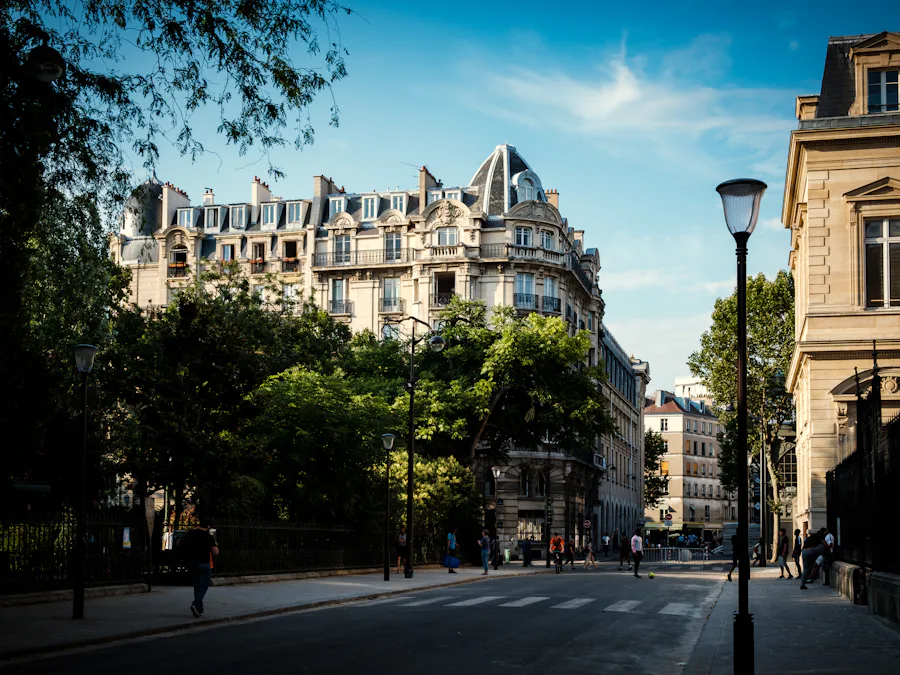
The photo shows a Paris neighborhood, not a particular hotel or room.
Affiliate link: BoardingNotes may earn a commission if you purchase through this link.
Compare Paris stays for your datesHow Paris Geography Actually Works
The spiral: 20 arrondissements
Paris has 20 numbered arrondissements, arranged in a clockwise spiral from the center outward. These administrative districts are useful for orientation, but a low number is not a quality rating. A hotel near a district boundary may be closer to your plans than another across the same arrondissement.
Right Bank and Left Bank
On a typical north-up map, the Right Bank is generally north of the Seine and the Left Bank south. The Louvre, Marais, Opéra, and Montmartre are on the Right Bank; Saint-Germain, the Latin Quarter, and the Eiffel Tower are on the Left.
Think in sightseeing clusters: the Louvre and Tuileries to the west of the historic center; the river islands and Marais farther east; Saint-Germain and the Latin Quarter across the river; the Eiffel Tower farther west; Montmartre to the north. Neither bank guarantees quiet, nightlife, or easy walking. Your particular cluster matters more.
Neighborhood names are not district boundaries
Le Marais lies mainly across the 3rd and 4th arrondissements. The tourist office groups several central districts together for accommodation browsing, but that does not make the whole 2nd arrondissement part of the Marais. Likewise, “Opéra” and “Grands Boulevards” describe overlapping visitor areas rather than the entire 9th.
Treat a neighborhood label as a starting point. Put the exact address on the map before comparing it with another hotel.
The Seven Things That Matter More Than a Famous Postcode
1. Itinerary fit. Mark your three or four priorities. Choose a base that works for the group, not only the most recognizable landmark.
2. Useful connections. Count the changes your journeys need, not just the lines at the nearest station. A nearby single line that goes where you need can beat a large interchange with long corridors.
3. Walking and terrain. Compare door-to-door routes, including station exits, crossings, slopes, and steps. “Walkable” depends on your pace and how much walking the day already contains.
4. Noise. Check recent room-specific comments and ask about orientation and sound insulation. A courtyard room may help, but it is not a guarantee of silence.
5. Evenings. Decide whether you want dinner and bars nearby or a quieter return. Check the block, not a blanket description of the district.
6. Room expectations and budget. Compare floor area, beds, elevator access, and the total stay cost. A central address does not tell you whether the room fits your family or luggage.
7. Arrival and departure. Use airport or station convenience as a tiebreaker unless a very early departure, late arrival, or mobility requirement makes it decisive. Check service hours for that actual journey, then confirm the hotel’s check-in window and late-arrival procedure. If you arrive before the room is ready or leave after checkout, ask whether it can store your bags.
Choose Your Paris Base: A Decision Framework
Start with the priority you would most regret getting wrong. These are conditional suggestions, not rules excluding whole districts.
Scroll horizontally to see all columns.
| Your priority | Start your search with | The condition that matters |
|---|---|---|
| Central sightseeing on a short trip | Louvre–Palais-Royal; Le Marais | Your main sights fit the daily walking or transit routes |
| Walks and evening life | Le Marais; Latin Quarter | Accept activity nearby, then choose the room carefully |
| Quiet evenings | Side streets in Saint-Germain or the 7th | Verify the block, room orientation, and recent reviews |
| A romantic café-and-culture stay | Saint-Germain; Montmartre | Choose between central Left Bank walks and hilltop terrain |
| Value | Latin Quarter and well-connected alternatives | Compare equivalent rooms and include transport costs |
| Family needs | Latin Quarter, 7th, or suitable 12th/15th addresses | Confirm beds, room space, elevator, and manageable walks |
| Solo travel | Marais or Latin Quarter | Your evening plans and return route are straightforward |
| Limited mobility | Suitable streets near accessible Line 14 entrances | The whole station-to-room route meets your needs |
| CDG or Orly access | RER B or Line 14 corridor, respectively | The station is useful for both arrival and daily plans |
| Train arrival | A base with a simple route from your actual station | “Near a station” means the right station |
The Five Strongest First-Time Bases
Le Marais: Mainly the 3rd and 4th
Best for: Couples, friends, and solo travelers who want neighborhood walks and evening activity.
Why it works: The official Marais guide places its core across the 3rd and 4th, with Place des Vosges, museums, shops, and bars among its attractions. A southern address is a different starting point for river walks from one near République.
Main drawbacks: A room above a lively street may conflict with an early bedtime. Check space and elevator access at the property; historic surroundings alone tell you neither.
Transit logic: Saint-Paul on Line 1 is useful for east–west travel. Saint-Sébastien–Froissart on Line 8 can suit an eastern address. Do not assume every Marais hotel has equally convenient access to both.
Choose it if: You want to combine neighborhood time with central sightseeing.
Skip it if: The available properties cannot meet your quiet-room or space requirements at your budget.
Hotel-address test: Check nearby bars and the walk to the station you will actually use, then ask whether your booked room faces the street.
Saint-Germain-des-Prés: Mainly the 6th
Best for: Travelers who prioritize cafés, galleries, and a central Left Bank setting.
Why it works: The tourist office’s Saint-Germain walk connects the neighborhood’s cultural streets with Saint-Sulpice, Odéon, and Luxembourg Gardens. It is a useful base when those places and the Seine feature in your plans.
Main drawbacks: Accommodation can be expensive, but there is no reliable rule that it is always the priciest option. Busy boulevards and restaurant streets also make “quiet Saint-Germain” too broad a promise.
Transit logic: Saint-Germain-des-Prés is on Line 4; Odéon serves Lines 4 and 10. An RER B arrival requires checking the walk from Saint-Michel–Notre-Dame or another suitable stop.
Choose it if: You will spend enough time around the Left Bank to value the location.
Skip it if: The premium forces you to compromise on room size, comfort, or the rest of your trip.
Hotel-address test: Look beyond the “Saint-Germain” label: a property toward Montparnasse changes your daily walks. Check the precise block and room orientation.
The Latin Quarter: Mainly the 5th
Best for: Travelers comparing a lively Left Bank base with the cost of Saint-Germain.
Why it works: Notre-Dame, the Panthéon, and Jardin des Plantes form useful nearby sightseeing anchors, depending on the address. The official Latin Quarter walk also shows the variety between the riverfront, university streets, and Mouffetard area.
Main drawbacks: The neighborhood is spread out, and the slope toward the Panthéon matters with luggage or limited mobility. Rue Mouffetard and its café streets should not be assumed quiet.
Transit logic: Saint-Michel–Notre-Dame and Luxembourg are on RER B. Cluny–La Sorbonne and Maubert–Mutualité are on Line 10. The best option depends on which part of the quarter you choose.
Choose it if: Your plans favor the Left Bank and you find a suitable room at a workable price.
Skip it if: Your chosen address adds an uphill walk or awkward connection you will dislike every day.
Hotel-address test: Trace the station-to-door route. “Latin Quarter” does not automatically mean a short walk from the airport train.
Louvre and Palais-Royal: The 1st
Best for: A short visit centered on the Louvre, Tuileries, and central sightseeing.
Why it works: You can prioritize this sightseeing cluster without beginning every outing with a train ride. The location also gives you options across the Seine, provided those walks suit your pace.
Main drawbacks: Central hotels can be costly. The Louvre end, Palais-Royal streets, and Les Halles have different evening settings; the whole 1st is neither silent after dinner nor equally convenient.
Transit logic: Palais Royal–Musée du Louvre and Louvre–Rivoli serve Line 1. Pyramides on Line 14 may suit some addresses; Châtelet–Les Halles is useful for others. Check walking and interchange distances.
Choose it if: This cluster matches your priorities and the rate leaves room for the rest of the trip.
Skip it if: Most of your time will be spent elsewhere or your preferred room is beyond budget.
Hotel-address test: Compare the actual entrance with the station exit and ask about noise. Do not equate a famous street with a suitable bedroom.
Opéra and the Grands Boulevards: The 9th and Nearby Streets
Best for: Travelers prioritizing transport choices, shopping, and theater evenings.
Why it works: Several transport corridors meet around this broader area. It can be especially useful for an arrival at Saint-Lazare when the hotel is on that side of the district.
Main drawbacks: A boulevard-facing room and a side-street room can offer very different stays. “Opéra” is also a broad booking label; it does not make a property close to every interchange.
Transit logic: Opéra station serves Lines 3, 7, and 8. Grands Boulevards serves 8 and 9. For Orly, compare the walk to Line 14 at Madeleine or Saint-Lazare instead of assuming Opéra itself has a direct airport metro.
Choose it if: The specific connections fit several days of your plans.
Skip it if: The room or street atmosphere matters more to you than the transport advantage.
Hotel-address test: Check the nearest useful station, not the longest list of stations in the listing.
Strong Alternatives Worth a Look
The 7th: Eiffel Tower and Invalides
Best for / why it works: Plans centered on the western Left Bank. An Eiffel Tower view may be worth paying for if enjoying it is a real part of your trip.
Main drawbacks: That view does not shorten journeys to the Marais or Montmartre. An arrondissement-wide transport rating is less useful than the actual route.
Transit logic: École Militaire serves Line 8; Invalides serves Lines 8 and 13 and RER C. Other addresses need a different approach.
Choose it if: Your plans justify the location. Skip it if: Your daily routes become unnecessarily long.
Hotel-address test: Check the walking route to the station and the sights, plus the exact view and room you are booking.
Montmartre: The 18th
Best for / why it works: Travelers who want to spend time in the hilltop neighborhood itself. The official Montmartre guide describes its steep streets and the funicular approach from Place Saint-Pierre.
Main drawbacks: Hills, steps, and additional journeys to other sightseeing clusters need to suit you. There is no minimum five-night rule, but a packed short visit leaves less room for the trade-off.
Transit logic: Abbesses serves Line 12; Anvers on Line 2 is another approach. The funicular helps on one part of the hill, not necessarily between your station and hotel.
Choose it if: Neighborhood atmosphere outweighs centrality. Skip it if: The actual approach is difficult for your mobility or luggage.
Hotel-address test: Establish whether the hotel is above or below the hill and check the full route, including steps.

Quieter or Better-Value Alternatives
Selected addresses in the 12th, 14th, 15th, and 17th deserve comparison. They are not uniformly cheaper, quieter, flatter, or roomier. For example, Line 14 at Gare de Lyon or Pont Cardinet can make particular addresses worth considering.
Choose one if the actual room, total price, and daily routes beat your central options. Skip it if the savings are small and the journeys are burdensome. Test the nearest useful station and evening return, even for a short stay; an outer district is not automatically a poor choice.
Areas That Are Less Practical for a Short First Trip
Evaluate the mismatch rather than declaring whole districts unsuitable. A shopping-focused address near the Champs-Élysées may add travel when most of your plans are around the Latin Quarter and Marais. A western residential address may work well for western sights and less well for repeated eastern journeys.
An airport hotel can make sense for an overnight connection or early flight. For several sightseeing days, compare the repeated commute before choosing it for the arrival alone. Apply the same test to suburbs and central hotels: total price, door-to-door time, and your tolerance for travel.
These are convenience decisions, not neighborhood safety ratings. This guide does not rank districts by crime or promise that any area is risk-free.
Five Hotel Examples to Compare After Choosing an Area
Choose your area first, then compare the exact room you would book. These five hotels give you practical starting points for different needs. Property details were checked on official hotel websites on October 15, 2026; prices, availability and booking terms depend on your dates.
Affiliate disclosure: We may earn a commission if you book through the hotel-name and booking links below, at no extra cost to you. These links open the property listing; check the exact room category before booking.
- Le Marais: Hôtel Caron, 3 rue Caron, 75004. Consider this for two friends who want separate beds in the Marais. Its Twin Room is listed at 16.5 m² for two people, with two 90 × 200 cm beds that can be joined, air conditioning and lift access. [H1] The trade-off is compact floor space: check whether the layout works for your luggage before choosing it. Check Hôtel Caron on Expedia.
- Saint-Germain-des-Prés: Hôtel de Seine, 52 rue de Seine, 75006. Consider the 22 m² Deluxe Room for a group of three: the hotel lists either three single beds or a king-size bed plus a single. [H2] That gives you a specific room category to compare rather than assuming every double takes an extra guest. The hotel explicitly says it is not accessible to people with reduced mobility, despite having a lift. [H3] Check Hôtel de Seine on Booking.com.
- Latin Quarter: Hôtel des Grandes Écoles, 75 rue Cardinal Lemoine, 75005. Consider this if a garden appeals between sightseeing outings. The official site lists an outdoor garden, air conditioning and double or twin beds; room sizes range from 10 to 25 m². Ask which size applies to your reservation. There are no televisions, so this suits travelers happy to trade in-room TV for that garden setting. [H4] Check Hôtel des Grandes Écoles on Booking.com.
- Louvre–Palais-Royal: Hôtel Louvre Sainte-Anne, 32 rue Sainte-Anne, 75001. Consider this for a Louvre-and-Palais-Royal-focused stay. Its room listings include single rooms, an elevator, and a two-person Reduced Mobility Room with a wheelchair-adapted shower. Room floor areas are not stated on that page. [H5] If access is essential, confirm the entrance-to-room route and bathroom dimensions directly; an accessible room label alone cannot establish suitability for your needs. Check Hôtel Louvre Sainte-Anne on Booking.com.
- Opéra–Grands Boulevards: Hôtel 34B – Astotel, 34 rue Bergère, 75009. Consider the approximately 39 m² Family Room for four people wanting separate sleeping spaces: it comprises two bedrooms linked by a private entrance area. There is an important catch: this category is on the sixth floor, with lift access only to the fifth and stairs for the final floor. [H6] Confirm the exact category and bed configuration. Check Hôtel 34B – Astotel on Booking.com.
Before booking any of these, ask about the specific room’s street or courtyard position, nearby lifts and other potential noise sources. Compare the total stay price and cancellation conditions alongside the room size.
How to Test a Specific Hotel Address Before You Book
- Find the exact entrance. Use the property’s address, not the location suggested by its name.
- Identify the useful station and exit. Check lines, corridors, and the route from the platform, not just the nearest metro symbol.
- Trace the walk. Look for steps, hills, crossings, and luggage obstacles. Request details from the property when maps are unclear.
- Route three actual plans. Compare total journey time and effort. A simple direct ride can be preferable to a shorter-looking route with difficult changes.
- Check the block and room. Look for nightlife or traffic, read recent relevant reviews, and confirm orientation, elevator access, and seasonal air-conditioning needs.
- Check your dates. Consult RATP’s current works information. A works calendar may concern particular stations or hours, not an entire line’s continuous closure.
Run the same location test on your finalists.
Airport and Station Access: Only Where It Changes Your Choice
For most three-to-five-night stays, a convenient daily base matters more than saving a little time on arrival. Early flights, late trains, and mobility needs can reverse that priority.
Charles de Gaulle: RER B connects the airport with Gare du Nord, Châtelet–Les Halles, Saint-Michel–Notre-Dame, and Luxembourg. Check your terminal’s approach and the service on your dates. RoissyBus ended on March 1, 2026, so do not book an Opéra hotel expecting that service.
Orly: Line 14 serves the airport, with central stops including Châtelet, Pyramides, Madeleine, and Saint-Lazare. OrlyBus ended on March 3, 2025. RER B plus Orlyval at Antony is another option; it is not a direct RER ride to the terminal.
The Paris Region Airports ticket is €14 full fare per journey under the 2026 tariff, checked September 30, 2026. It covers the relevant metro/RER/train connections, including Line 14 or Orlyval for Orly and RER B for CDG; it does not cover buses or trams. If your Navigo Easy pass already holds Metro–Train–RER tickets, you cannot load this airport ticket onto the same pass. Check what is on your card before buying. Recheck the current product before travel.
Rail arrivals: Identify the station on your ticket first. Opéra-area connections may suit Saint-Lazare; RER B can help from Gare du Nord; Lines 1 and 14 serve Gare de Lyon. None of these makes one neighborhood the best for every train arrival.
Intercity transport
Match your arrival station to your stay
Compare arrival stations as well as departure times and ticket conditions before booking. Match the actual arrival station to your hotel address using the local transport guidance above, especially if you will have luggage or need step-free access.
This opens Omio’s general travel search. The image shows a Montmartre street and metro entrance, not an intercity service.
Affiliate link: BoardingNotes may earn a commission if you purchase through this link.
Book Trains, Buses and FlightsTerrain, Stairs, and Step-Free Access
Good transport connections do not automatically mean step-free access. Much of the older metro has accessibility limitations. Line 14 is designed for wheelchair access, but that does not make connecting metro lines at the same station accessible.
Use RATP’s reduced-mobility planning tools and live elevator information. Check the entrance, platform, interchange, and destination. RATP describes its Paris bus network as accessible, but check the stops and operating conditions for your journey.
Assess the route beyond the station, too. Montmartre’s hills are an obvious concern; slopes around the Panthéon and Luxembourg also matter. Confirm any steps at the hotel entrance and whether the elevator reaches your room floor. A “central” or “accessible” label is not enough detail.
Your Final Hotel-Address Checklist
- Exact street address and entrance confirmed.
- Useful station, lines, and exit identified.
- Station-to-door route checked for slopes, steps, and crossings.
- Three main sightseeing journeys compared.
- Evening return and possible street noise considered.
- Room orientation, size, and bed arrangement confirmed.
- Entrance steps and elevator access checked where needed.
- Air conditioning confirmed for warm-weather stays if required.
- Cancellation terms and total price understood.
- Tourist tax checked: whether included, what applies to your party, and when it is collected. It may be charged separately.
- Works and service hours checked for your dates, including arrival and departure.
Frequently Asked Questions
What is the best area to stay in Paris for a first visit?
Start with Le Marais, Saint-Germain, and the Latin Quarter. Add Louvre–Palais-Royal for a Louvre-centered stay or Opéra for useful connections. Compare actual addresses before deciding.
Is the Right Bank or Left Bank better?
Neither is inherently better. Choose the side and neighborhood that best fit your plans; both have busy streets and quieter pockets.
Which arrondissement is most central?
The 1st is a strong central sightseeing base, particularly for the Louvre and Tuileries. It is not the midpoint of every itinerary, and you will still need transport for some sights.
Is the Eiffel Tower area a good place to stay?
Yes, when the western Left Bank or the view is a priority. Check journeys to your other sights rather than treating the landmark as a substitute for a location test.
Is Montmartre too far for a first trip?
Not automatically. It adds hills and journeys to other clusters, so compare those costs with how much time you want in the neighborhood itself.
Where should couples, solo travelers, and families stay?
Couples might shortlist Saint-Germain or Marais; solo travelers can use the same route-and-evening criteria. Families should prioritize the actual room, elevator, and manageable walks over a district label.
Which areas are easiest from CDG or Orly?
Addresses near a useful RER B stop can simplify CDG journeys; Line 14 can simplify Orly journeys. Check the walk from the correct exit and current service conditions.
Do I need to stay beside a metro station?
No. A manageable walk to a line serving your plans may be enough. More lines are not automatically better if the interchange adds effort.
How much does the exact address matter?
It determines the station approach, street activity, slopes, and daily routes. Two properties with the same neighborhood label can suit very different trips.
Which areas work for travelers with limited mobility?
Start with a verified accessible station-to-hotel route, potentially along Line 14. Check elevators, connecting services, street gradients, and the property itself before choosing an area.
Before You Book
Choose two or three areas, then compare a small number of real addresses using the same test. Keep the option that gives you a suitable room, manageable daily routes, and a total price you are comfortable with. You do not need the universally best neighborhood; you need a base that works for your Paris trip.
Hotel sources
Official hotel and room sources supporting the examples above. These are reference links; use the clearly labelled booking links in the hotel section to compare availability.
- [H1] Hôtel Caron: official room information. Back to reference
- [H2] Hôtel de Seine: official Deluxe Room information. Back to reference
- [H3] Hôtel de Seine: official FAQ on reduced-mobility access. Back to reference
- [H4] Hôtel des Grandes Écoles: official rooms and facilities. Back to reference
- [H5] Hôtel Louvre Sainte-Anne: official rooms and accessibility information. Back to reference
- [H6] Hôtel 34B – Astotel: official rooms and facilities. Back to reference