First Time in Istanbul: Things to Know Before You Go
Planning your first time in Istanbul gets easier when you stop trying to hold the whole city in your head. Start with three practical zones: the Historic Peninsula, the central European side, and the Asian side. Choose where to sleep, work out the crossings, and then decide what fits into each day.
This guide helps you make those decisions before booking. It covers airport choices, useful transport, mosque visits, ticket pitfalls, and the checks that matter for a three-to-five-night stay.
First Time in Istanbul: The Short Answer
- Allow three full sightseeing days, with four or five nights offering more breathing room.
- Start with Sultanahmet or Sirkeci for historic sights, Karaköy or Beyoğlu for evening plans, or Kadıköy for a stay built around neighborhood walks and ferry crossings.
- Compare IST and SAW door to door, including changes, luggage, and your arrival time.
- Learn the T1 tram, your nearest rail station, and one useful ferry route.
- Check mosque access, Topkapı’s closing day, and the exact ticket or card you intend to buy.

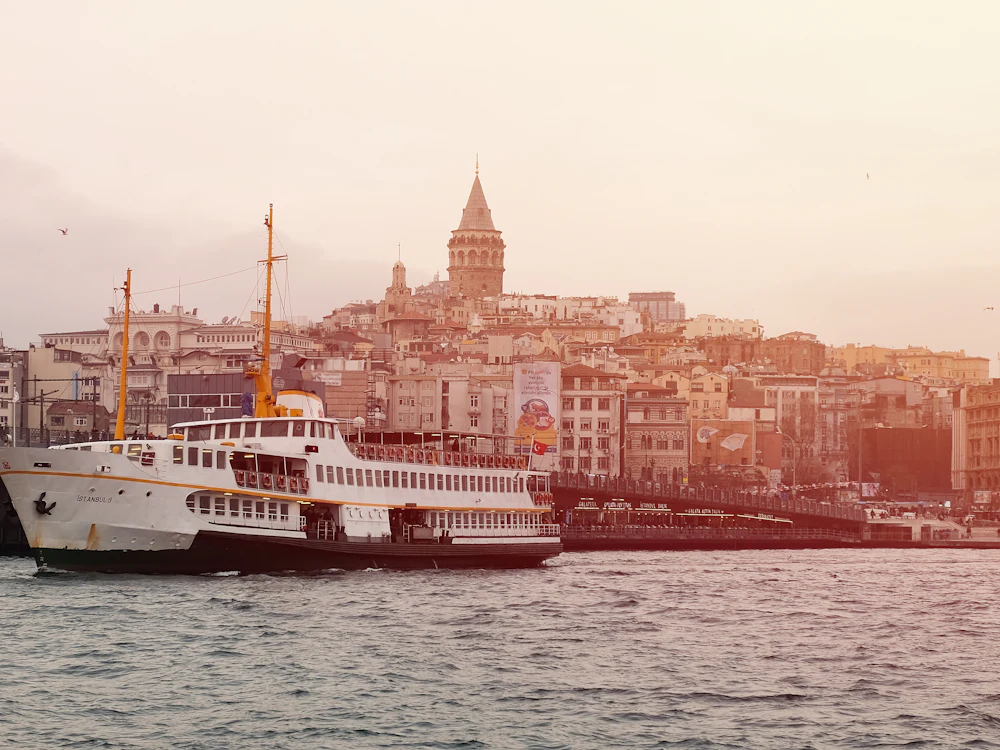
Cover photo: Engin Yapici / Unsplash.
Jump to
- The Three Zones That Matter
- IST or SAW: Choosing Your Airport
- Choose Your Istanbul Base
- Getting Around: What Each Mode Is For
- Istanbulkart, City Cards, and Contactless Payment
- Visiting Mosques Respectfully
- Major Sights: The Details That Change Your Plan
- Your Before-You-Go Checklist
- Frequently Asked Questions
Istanbul at a Glance
Istanbul spans Europe and Asia; Ankara is Türkiye’s capital. The currency is the Turkish lira, usually shown as TL or TRY. The Bosphorus separates the two continents, while the Golden Horn divides the Historic Peninsula from the Karaköy–Beyoğlu side of European Istanbul.
Those are different crossings. Walking across Galata Bridge takes you over the Golden Horn, not into Asia. Hills, steps, crowds, and station corridors also matter: a short distance on a map can be a tiring journey with bags.
Operational information in this guide was checked on September 30, 2026. Use the linked operators to confirm your travel dates, especially for departures, visitor access, and ticket conditions.
The Three Zones That Matter
1. The Historic Peninsula
Sultanahmet, Eminönü, Sirkeci, and Beyazıt form a useful first sightseeing cluster. Hagia Sophia, the Blue Mosque, Topkapı Palace, and the Basilica Cistern are around Sultanahmet; the bazaars extend your walking route toward Beyazıt and Eminönü.
The T1 tram serves this corridor. Sirkeci offers Marmaray connections, and Eminönü has ferry piers. Staying here can simplify early sightseeing, but assess the hotel’s actual street for traffic, crowds, restaurants, and noise. “Historic center” does not guarantee a quiet room or a flat approach.
2. The Central European Side
Karaköy, Galata, Beyoğlu, Taksim, Kabataş, and Beşiktaş suit different combinations of dining, galleries, shopping, and waterfront time. They are a broad planning zone, not one compact neighborhood.
The T1 follows part of the waterfront; M2 serves Şişhane and Taksim, and F1 connects Taksim with Kabataş. Upper Galata and parts of Beyoğlu involve steep approaches. Test the walk from the useful station to your accommodation rather than relying on a district label.
3. The Asian Side
Kadıköy and Üsküdar are useful starting points for neighborhood walks and ferry connections. Kadıköy is the western end of M4; Üsküdar has a Marmaray station. From Kadıköy’s M4 station, the Marmaray interchange is Ayrılık Çeşmesi, not the waterfront itself.
This base adds a crossing when you visit the Historic Peninsula. That can be an enjoyable part of the day, provided you accept the return journey. Neither shore is a more “real” Istanbul.
The official rail map and Şehir Hatları routes help turn these zones into practical connections.
| Area | Best fit | Check before choosing |
|---|---|---|
| Historic Peninsula | Historic sights and early starts | Crowds and street-specific noise; check evening plans |
| Central European side | Dining, galleries, shopping, waterfront | Broad area; hills and station access vary |
| Asian side | Neighborhood walks and ferry-based days | A crossing for most classic historic sights |
Full area comparison: neighborhoods, transport and trade-offs
Scroll horizontally to compare all five columns.
| Zone | Main areas | Best starting point for | Useful transport | Main trade-off |
|---|---|---|---|---|
| Historic Peninsula | Sultanahmet, Sirkeci, Eminönü, Beyazıt | Historic sights and early starts | T1; Marmaray at Sirkeci; Eminönü ferries | Crowds and street-specific noise; check evening plans |
| Central European side | Karaköy, Galata, Beyoğlu, Taksim, Kabataş, Beşiktaş | Dining, galleries, shopping, waterfront | T1 on the waterfront; M2; F1; selected ferry piers | Broad area; hills and station access vary |
| Asian side | Kadıköy, Üsküdar | Neighborhood walks and ferry-based days | Ferries; Marmaray at Üsküdar; M4 and Ayrılık Çeşmesi interchange | A crossing for most classic historic sights |
How Many Days Do You Need?
For a first visit, three full days is a useful planning minimum, not a promise that you will see everything. It gives you room for the historic cluster, part of the central European side, and a crossing to Asia. Four or five nights can absorb a late arrival, a slower morning, and more time at larger sights.
Count usable time before booking. Landing in the evening and departing early do not create two sightseeing days. Choose one major time-consuming visit per day, then add nearby walks or a smaller stop. With children, limited mobility, or summer heat, leave more recovery time between outings. If Istanbul is one stop on a longer Türkiye trip, plan the three-day Cappadocia itinerary separately and allow additional time for travel between the two.
IST or SAW: Choosing Your Airport
Istanbul Airport (IST) is on the European side. M11 connects it with Gayrettepe, where you can change to M2. Its extension to Halkalı opened in June 2026, so older maps may show an incomplete line. See the transport ministry’s M11 update and M2 interchange information. Havaist coaches provide another option; compare the actual stop with your hotel address.
Sabiha Gökçen Airport (SAW) is on the Asian side. The M4 metro connects the airport with Kadıköy and meets Marmaray at Ayrılık Çeşmesi. A cross-city journey can therefore use rail without depending entirely on road traffic. If your hotel is near Sirkeci or Üsküdar, compare the M4–Marmaray connection at Ayrılık Çeşmesi before automatically riding all the way to Kadıköy.
Use the airport’s side as a starting clue, then compare total journey, number of changes, service hours, walking, and luggage. A same-side airport is not automatically the easiest choice for every address. Neither airport has a direct train to Sultanahmet’s tram stop.
Check the final service for your arrival date, allowing for immigration and baggage collection. For a late landing, compare a coach or prearranged transfer with the remaining rail options. Confirm the airport code again for departure, and keep arrival evening lightly planned.
Choose Your Istanbul Base
Answer these questions before comparing individual hotels:
- Are the classic sights your main priority? Start with Sultanahmet or Sirkeci, then check the walk to your first visit and the T1.
- Do you want dinner and evening activity nearby? Compare Karaköy/Beyoğlu with Kadıköy, using the particular street and your return route.
- Would a daily ferry crossing feel enjoyable? Kadıköy or Üsküdar may suit you; include waiting and walking, not just time on the water.
- Do you need quieter nights? Ask about room orientation, sound insulation, and nearby venues. No whole district guarantees silence.
- Are hills or stairs a problem? Check the complete station-to-room route, including the hotel entrance and elevator.
- How much commuting will you accept? Map one sightseeing day and one evening return from each shortlisted address.
Use airport convenience as a tiebreaker unless arrival time or accessibility makes it decisive. Families should also confirm bed arrangements and space for a stroller. A hotel near a station you will use is more helpful than one near an impressive-looking interchange in the wrong direction.
To start your shortlist, compare these two hotels and check current room details and availability for your dates.
Sirkeci Mansion on Taya Hatun Sokak is a Sirkeci option within walking distance of Topkapı Palace and Hagia Sophia.
The Bank Hotel Istanbul on Bankalar Caddesi is a Karaköy option for evenings around Galata and Beyoğlu.
Browsing from Türkiye? Booking.com may not display stays within Türkiye when you browse from inside the country. If no properties appear, use the official hotel websites above to check rooms directly.
Find your Istanbul base
Compare stays around your daily routes
Enter your dates and guest count, then check each property’s side of the city, daily routes and room details. Compare the full price and cancellation terms before booking.
If browsing from Türkiye, Booking.com may not display domestic stays. The official hotel websites listed above offer another way to check rooms.
Affiliate link: BoardingNotes may earn a commission if you purchase through this link.
Compare Istanbul stays for your datesGetting Around: What Each Mode Is For
- T1 tram: links Kabataş and Karaköy with Eminönü, Sirkeci, Sultanahmet, and Beyazıt. Check the T1 route for the historic sightseeing corridor.
- M2 metro: useful for European-side journeys through Şişhane, Taksim, and Gayrettepe.
- Marmaray: an undersea rail crossing, including Sirkeci and Üsküdar; useful when the rail connection fits your destination.
- F1 funicular: connects Taksim and Kabataş, avoiding the walk between their different elevations. See the F1 line.
- M4 and M11: useful airport links; M4 also serves everyday Asian-side journeys.
- Ferries: connect waterfront districts while giving you time on the water.
- Buses: fill gaps beyond rail and piers, but journey times depend on road traffic.
Group nearby stops into one outing. Repeatedly crossing the city for individual attractions uses time you could spend exploring. Before returning late, check your actual line’s last departure; a night service elsewhere does not mean your route runs all night.
Istanbulkart, City Cards, and Contactless Payment
The city’s transport-card guide distinguishes four options:
- Rechargeable Istanbulkart: load lira for pay-as-you-go travel; buy and top up at authorized machines.
- Istanbul City Card: a visitor product offering unlimited transport periods of 1, 3, 5, 7, or 15 days; check the current included services.
- Limited Pass Tickets: fixed numbers of trips, from one to ten depending on the product.
- Contactless bank cards: accepted on listed city services, but check the particular operator, especially for airport coaches and rail products.
A rechargeable card is a practical starting point for mixed city journeys. Do not budget for resident-style transfer discounts with an anonymous visitor card. The municipality’s personalization rules reserve transfer and distance-related concessions for eligible personalized cards.
Compare a timed card with the trips you will actually take. Do not assume a transport product includes museums or sightseeing cruises. Load credit gradually: the tourism guide says unused Istanbulkart balance is not refunded at the end of a visit. Keep a backup payment method.
Ferries: A Crossing and a View
Şehir Hatları separates regular city ferry routes from Bosphorus sightseeing tours. A crossing such as Eminönü–Kadıköy gets you to another neighborhood; a tour has its own route, duration, stops, and ticket conditions. Pick the product that matches your plan.
Use the official ferry timetable and notices to check the departure pier and return service. Nearby piers can serve different operators or routes. Allow time to find the right boarding point, and check disruption notices when weather is poor.
The ferry tariff also distinguishes card eligibility and particular night services. Do not assume every route runs overnight or that every card receives a transfer or distance refund. For a first crossing, a daytime out-and-back plan with a clear return option keeps things straightforward.
Visiting Mosques Respectfully

Clothing and Behavior
Pack loose clothing covering shoulders and knees, and a scarf for women to cover their hair. Follow the entrance’s requirements, remove shoes where directed before entering carpeted prayer areas, speak quietly, and give worshippers space. Ask before photographing people and respect restricted areas.
The Blue Mosque’s visitor rules describe loan clothing and separate visitor/worship areas; they also say strollers should not enter the interior. Bringing your own suitable clothing makes the visit easier without relying on supplies at every mosque.
Prayer Times and Fridays
Prayer times change daily; consult Diyanet’s Istanbul timetable and posted visitor notices. The Blue Mosque’s rules currently close tourism visits until 2:30 p.m. on Fridays for cleaning and prayer. Its visitor guide confirms free admission.
Leave flexibility around worship and follow staff instructions. Do not apply one mosque’s timetable automatically to Hagia Sophia’s separate tourist gallery.
Major Sights: The Details That Change Your Plan
Hagia Sophia
The culture ministry’s visitor arrangement separates cultural visits from worship, with a paid upper-gallery route for foreign visitors and a separate entrance. Do not assume sightseeing admission gives access to prayer areas. Confirm the current entrance, ticket price, and gallery hours at the official visitor information point before joining a queue. When buying a package, check the exact attraction named on the ticket.
Topkapı Palace
Plan it as the main interior visit of that day, with time for courtyards and the sections you most want. Keep the other Sultanahmet interiors optional; being close together does not make Topkapı, Hagia Sophia, the Blue Mosque, and the cistern a realistic single-morning checklist. The current National Palaces visitor page lists Tuesday as the closing day and a combined ticket covering Topkapı Palace, the Harem, and Hagia Irene. Check that page for current hours, ticket conditions, and exceptions; old pages listing separate low prices are unreliable planning tools.
Basilica Cistern
The Kültür AŞ visitor page lists different daytime and evening pricing periods. Confirm the session and visitor category you are buying; a broad opening-hours range does not mean one ticket works throughout it. The operator also lists card/Istanbulkart payment at entry, so do not arrive relying only on cash. Allow for an underground visit and check specific access arrangements if steps are difficult.
Bazaars and Passes
Treat the Grand Bazaar and Spice Bazaar as separate stops with their own calendars. Check opening on your particular day, especially around religious holidays, before making shopping the day’s fixed anchor.
MuseumPass İstanbul, MüzeKart, transport cards, and commercial attraction bundles are different products. Compare eligibility, named inclusions, validity, and reservation requirements. The ministry’s MuseumPass page excludes night-museum sessions; a pass name alone is not enough to establish access.
Tickets & guided tours
Choose the visit that fits your itinerary
Compare Istanbul admission tickets and guided tours. Check the exact sites and sections included, whether you are buying admission, a guided tour, or an audio guide, and the meeting point and cancellation terms.
Allow time for security checks.
Affiliate link: BoardingNotes may earn a commission if you purchase through this link.
Compare Istanbul tickets and guided tours on TiqetsMoney, Cards, and Cash
Carry a payment card and a modest amount of lira for purchases where cards are unavailable. Ask before ordering or boarding if your payment method is essential, and keep a second card separately.
When a terminal or ATM offers a choice of currencies, select lira to avoid the merchant or ATM’s optional currency conversion. Visa’s Türkiye guidance explains the additional conversion cost; your own bank’s fees may still apply. Read ATM charges before confirming, and review the bill before adding a tip or paying a service charge twice.
Safety, Taxis, and Crowds
Check your government’s current travel advice before departure and monitor local notices during your stay. The UK’s Türkiye advice flags pickpocketing, taxi precautions, and demonstrations; avoid protests and follow local instructions.
Keep bags zipped in crowded places. Decline persistent invitations from strangers to a particular bar or restaurant. Use a registered taxi, note its plate, and ensure the meter is running; an app is useful for booking but does not remove those checks.
Solo travelers should plan the evening return before heading out and share plans with someone they trust. Keep insurance and accommodation details accessible. Türkiye’s emergency number is 112. Save your hotel address in Turkish as well as its map location.
Connectivity, Weather, Hills, and Accessibility
Arrange roaming, a local SIM, or a compatible eSIM before relying on mobile data. Some eSIM services face access restrictions in Türkiye, so confirm the provider’s current instructions before travel. Download offline maps and keep your booking details available without a connection.
Arrange mobile data before you leave home. Airalo’s current Turkey guidance warns that its eSIMs cannot be downloaded after arrival. Install and complete the setup before entering Türkiye, following your chosen package’s activation instructions. Your phone must be eSIM-compatible and carrier-unlocked; check the exact device model before buying.
Affiliate disclosure: BoardingNotes may earn a commission if you purchase through the link below, at no extra cost to you.
Compare Airalo Turkey eSIM plans. Check the data allowance, validity period, network coverage and top-up options against your trip length and your mobile provider’s roaming offer.
Check the forecast close to departure. Bring shoes with grip, a layer for wind on the water, and rain or sun protection as needed. Avoid planning your longest uphill walk immediately after an overnight flight.
For mobility or stroller needs, verify the complete journey: pavement, station entrance, lift, interchange, pier boarding, and attraction entrance. Metro İstanbul publishes accessibility and lift/escalator service information. A station marked accessible does not guarantee that every lift is working or that the street beyond is step-free. Ask the hotel about the actual route and room access.
Ten First-Visit Mistakes to Avoid
- Treating the city as one walkable center. Plan by zone and crossing.
- Booking by district name alone. Test the exact hotel address.
- Choosing a flight only by fare. Include the airport transfer and arrival time.
- Using taxis for every journey. Compare rail and ferry where they fit.
- Confusing a ferry with a cruise. Check the route and ticket product.
- Expecting anonymous-card discounts. Budget using the applicable visitor fare.
- Scheduling a mosque without checking access. Allow for worship and Friday rules.
- Buying a pass from its headline alone. Read inclusions and exclusions.
- Trusting a ticket seller’s “official” label. Start with the attraction or operator.
- Filling every hour. Leave room for queues, meals, hills, and the unexpected.
Your Before-You-Go Checklist
Entry and Documents
- Check your nationality and passport type in the Ministry of Foreign Affairs visa guidance; use its official e-Visa link where applicable.
- Check passport validity and exceptions. The ministry recommends six months from arrival; the general rule requires 60 days beyond the permitted stay.
- Store document copies separately and check the current requirement for carrying original identification.
Airport and Arrival
- Confirm IST or SAW on both bookings.
- Save the journey to your actual hotel, including the first change and final walk.
- Check service hours and a fallback for delays.
Transport and Payment
- Choose a card or payment method for your expected journeys.
- Locate authorized purchase/top-up points and keep a backup payment card.
- Download the rail map and save your useful ferry route.
Attractions and Mosques
- Check Topkapı’s closing day and the current visitor arrangements for Hagia Sophia and the cistern.
- Read ticket/pass inclusions and any session restrictions.
- Check prayer-time access and pack suitable clothing.
Connectivity
- Confirm phone compatibility, coverage, and activation instructions.
- Save maps, tickets, and your hotel’s contact details offline.
Comfort and Safety
- Check the forecast and pack for walking and waterfront wind.
- Verify specific accessible routes if needed.
- Save 112, insurance assistance, and consular contacts; check current travel advice.
Frequently Asked Questions
Is Istanbul Easy to Navigate for First-Time Visitors?
It becomes more manageable when you group nearby sights and learn the rail or ferry connection from your base. Allow for station walks and changes.
How Many Days Are Enough?
Aim for three full sightseeing days as a starting point. Four or five nights give more flexibility, depending on flight times and your pace.
Which Airport Is Better, IST or SAW?
Compare the full journey to your hotel. IST has M11 access; SAW has M4. Arrival time, changes, luggage, and the final walk can outweigh the airport’s side.
Where Should First-Time Visitors Stay?
Start with Sultanahmet/Sirkeci for historic sights, Karaköy/Beyoğlu for evening plans, or Kadıköy if you welcome crossings. Verify the exact address.
Do You Need an Istanbulkart?
It is a useful option, but alternatives exist. Choose according to your routes and expected use; an anonymous card does not automatically receive personalized-card concessions.
Can You Use a Contactless Bank Card?
On supported services, yes. Check the operator’s acceptance and your bank’s overseas fees, and carry a backup rather than assuming universal coverage.
Is the Asian Side Worth Visiting on a Short Trip?
If your pace allows, a ferry crossing and time in Kadıköy or Üsküdar add another perspective. Keep the outing focused instead of trying to cover the entire shore.
What Should You Wear to a Mosque?
Choose loose clothing covering shoulders and knees; women should bring a headscarf. Follow the entrance’s shoe and clothing instructions.
Is Istanbul Safe for Tourists?
Assess your trip using current government advice, local conditions, and your circumstances. Secure valuables, avoid demonstrations, and plan how you will get back at night.
Can You Rely on Taxis?
They can be useful with luggage or late at night, but road traffic affects travel time. Use a registered, metered taxi and keep the journey details.
Can You Drink the Tap Water?
Do not assume municipal treatment guarantees conditions inside every building. İBB’s water guidance distinguishes the network supply from internal pipes and storage tanks. Ask your accommodation about its drinking-water supply; choose sealed bottled water if uncertain.
Do You Need Cash?
Keep a modest lira reserve alongside cards. Check payment before committing to a purchase; some attractions, including the cistern, specify cashless entry payment.
What to Do Next
Choose your base, compare the airport journey, and mark your three main sightseeing priorities. Then use the before-you-go checklist to settle transport, tickets, and arrival details. Leave space between the fixed plans: that is where a ferry ride, a longer lunch, or an unhurried neighborhood walk can fit. Explore all Türkiye travel guides.