
The short answer: how to split four days in Bangkok
For 4 days in Bangkok, give each day one area:
- Day 1: The Grand Palace and Wat Pho in the old royal quarter, with Wat Arun across the river if time and energy allow.
- Day 2: The Chao Phraya River and Chinatown.
- Day 3: Chatuchak on a weekend, or Lumphini and Siam on a weekday.
- Day 4: A day trip to the ancient city of Ayutthaya.
Two rules shape the plan: start Day 1 early, because the Grand Palace stops selling tickets at 3:30 p.m. and requires covered shoulders and knees; and put Chatuchak on a Saturday or Sunday, since it's a weekend market.
Before you fly, check Thailand's current entry rules and complete the Thailand Digital Arrival Card.
This plan assumes four full days and a first visit. Bangkok is hot year-round, so each day puts outdoor sights in the morning and leaves room for a midday break.
Jump to
- four-day Bangkok at a glance
- Entry rules to check before you fly
- Getting in from the airport and getting around
- Where to stay for this itinerary
- Day 1: The Grand Palace, Wat Pho, and Wat Arun
- Day 2: The river and Chinatown
- Day 3: Chatuchak and modern Bangkok
- Day 4: Ayutthaya
- Keep / Swap / Skip
- preparation checklist
- FAQ
Your four-day Bangkok itinerary at a glance
| Day | Main area | Core stops | Optional stop | Timing note | Getting there |
|---|---|---|---|---|---|
| 1 | Old royal quarter | Grand Palace, Wat Pho | Wat Arun | Grand Palace tickets until 3:30 p.m. | Chao Phraya Express Boat or taxi |
| 2 | River and Chinatown | A boat ride on the Chao Phraya, Chinatown streets | Evening street food on Yaowarat Road | Chinatown is busiest in the evening | Boat, MRT, or taxi |
| 3 | North and central Bangkok | Chatuchak on a weekend; Lumphini and Siam on a weekday | Lumphini or Siam after Chatuchak | Move the market day to Saturday or Sunday | BTS or MRT |
| 4 | Ayutthaya | The historical park's temple ruins | — | Start early; return before dark | Train, minivan, or tour |
Details checked October 27, 2026. Confirm hours, prices, and closures for your own dates.
Who this itinerary is for
This route suits independent first-time visitors who want the major temples, the river, a market, and one day trip, using public transport where it's easy. Expect heat and humidity, especially outside the cooler, drier months (roughly November to February). Plan indoor or shaded breaks in the early afternoon.
Entry rules to check before you fly
Thailand's entry rules changed in 2026, so check them with the Royal Thai Embassy in Washington or your nearest Thai consulate before you book. As of October 2026:
- Visa exemption: Since September 15, 2026, U.S. citizens and travelers from many other countries can enter without a visa for up to 30 days for tourism, down from 60 days previously. A one-time extension may be available from Thai immigration.
- Thailand Digital Arrival Card (TDAC): Required for foreign visitors since May 1, 2025. Complete it online within the official three-day submission window, including your arrival date, one per traveler, on the official TDAC site. It's free on the official site, so avoid third-party sites that charge a fee.
- Passport and proof: Your passport should be valid for at least six months beyond your arrival date. Officers may ask to see a return or onward ticket and proof of sufficient funds.
Our international travel checklist covers the rest of your pre-trip paperwork.
What the official advisory says
The U.S. State Department's Thailand advisory (issued July 7, 2026) rates Thailand at Level 1: Exercise normal precautions. It raises two areas to Level 2: the border region with Cambodia, because of the risk of armed conflict, and Yala, Pattani, and Narathiwat provinces in the far south, because of the risk of unrest. Bangkok isn't in either area.
Its practical guidance for visitors includes:
- Crossing roads: Use pedestrian bridges where they exist.
- Taxis: Use metered taxis and insist that the driver turns the meter on.
- Bars: Bar-tab scams occur, where some venues overcharge.
- Theft: Pickpocketing and bag-snatching happen, so keep your belongings close.
- Demonstrations: Avoid areas around protests.
- Air quality: Dust and vehicle pollution are common in Bangkok from December to February.
- Emergencies: Police 191, ambulance 1669, Tourist Police 1155.
Read the full advisory before you go, since it can change. Our travel insurance guide explains what to check in a policy.
Getting in from the airport and getting around
From the airport
Bangkok has two airports. Most long-haul flights use Suvarnabhumi (BKK); many regional and low-cost flights use Don Mueang (DMK). Check which one is on your ticket.
- Airport Rail Link (from BKK): Runs from the airport to Phaya Thai station in the city, where you can change to the BTS Skytrain. The fare to Phaya Thai is 45 baht, and trains run from about 5:30 a.m. to midnight.
- From Don Mueang (DMK): Options include the SRT Red Line and A1–A4 airport buses. Check the airport’s transport information for the route that suits your hotel, then confirm service hours for your arrival time. The Airport Rail Link above serves BKK.
- Taxi: Use an official metered taxi and make sure the meter is on.
In the city
- BTS Skytrain and MRT subway: The easiest way to cross the city and skip traffic. Payment options differ by operator and line. Check the gate signs or buy a ticket; do not assume one bank card works across both BTS and MRT.
- Chao Phraya Express Boat: The orange-flag boat charges a flat 19-baht fare and stops at piers near the old royal quarter and Chinatown.
- Cross-river ferry: Small ferries cross from Tha Tien pier, near Wat Pho, to Wat Arun.
- Taxis and ride-hailing apps: Useful in the heat and at night. Insist on the meter in regular taxis.
Stay connected
Maps, ride-hailing apps, and transit planning need data from the moment you land. An eSIM is one option if your phone is unlocked and supports it. Our international eSIM guide explains what to check.
Where to stay for this itinerary
For a first visit, look for a stay within an easy walk of a BTS or MRT station, or by the river near an express boat pier. Either makes the heat and traffic easier to manage.
- Riverside: Close to the boats for Day 1 and Day 2.
- Silom and Sathorn: BTS and MRT access, with the river nearby.
- Sukhumvit: Along the BTS line, with many hotels and restaurants. Check the walk to the station.
Whichever you choose, map the walk from the hotel to the nearest station or pier before you book. Our hotel selection checklist covers room details, total price, and booking terms.

Choose your Bangkok base
Compare stays around your daily routes
Use the riverside, Silom and Sathorn, or Sukhumvit as starting points, then check the exact hotel address against the stations or piers you will use. Enter your actual arrival and departure dates, including any nights outside the four sightseeing days.
Compare the full price, room conditions and cancellation terms. A neighborhood label alone does not tell you how far the hotel is from a useful station or pier.
Affiliate link: BoardingNotes may earn a commission if you purchase through this link.
Compare Bangkok stays for your datesDay 1: The Grand Palace, Wat Pho, and Wat Arun
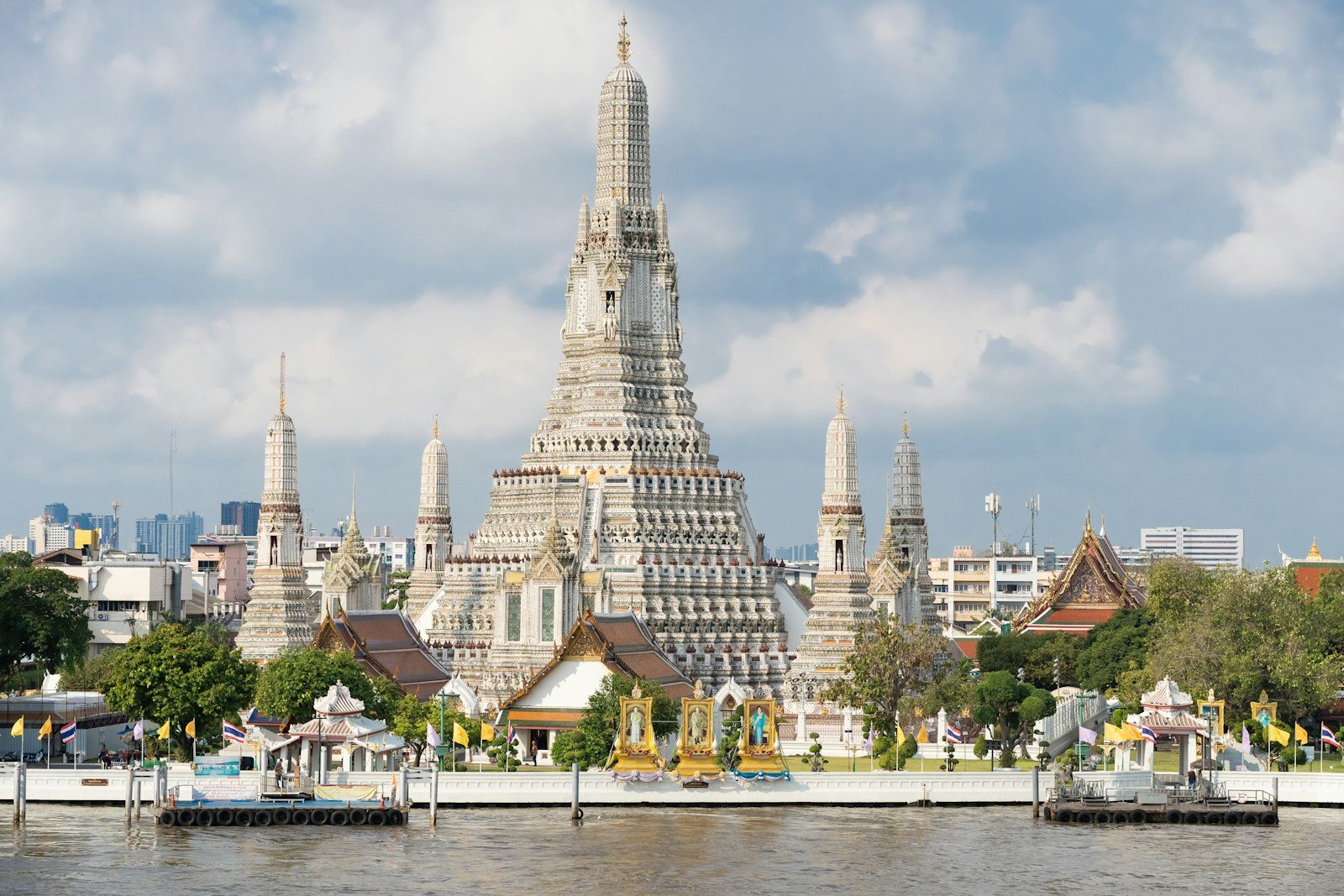
Route: Grand Palace and Wat Phra Kaew at opening → Wat Pho → lunch and a cool break → ferry to Wat Arun if time and energy allow → evening by the river.
Dress code first. Arrive in a sleeved, opaque top and long trousers or a long skirt, with shoulders and knees covered. The Grand Palace also prohibits torn or tight trousers, so coverage alone is not enough. Wear suitable clothes before leaving your hotel rather than counting on borrowing a sarong at the entrance.
The Grand Palace opens for ticket sales at 8:30 a.m. and stops selling tickets at 3:30 p.m.; the complex closes around 4:30 p.m. Admission is 500 baht and includes Wat Phra Kaew, the Temple of the Emerald Buddha, and the Queen Sirikit Museum of Textiles. The palace can close for royal ceremonies, so check before you go. The nearest boat pier is Tha Chang.
Wat Pho, home of the Reclining Buddha, is a short walk south. Admission is 300 baht for foreign visitors. The temple’s visit page lists 8 a.m.–7:30 p.m.; this itinerary visits during the middle of the day.
Wat Arun sits across the river. Take the small ferry from Tha Tien pier. It's open daily from 8 a.m. to 6 p.m., and admission is 200 baht.
Prices above were current in 2026 and can change.
After lunch, take a break somewhere cool. In the evening, many visitors watch Wat Arun from the riverbank on the Wat Pho side.
Day 2: The river and Chinatown
Route: Chao Phraya Express Boat along the river → Chinatown (Yaowarat) on foot → rest → evening street food.
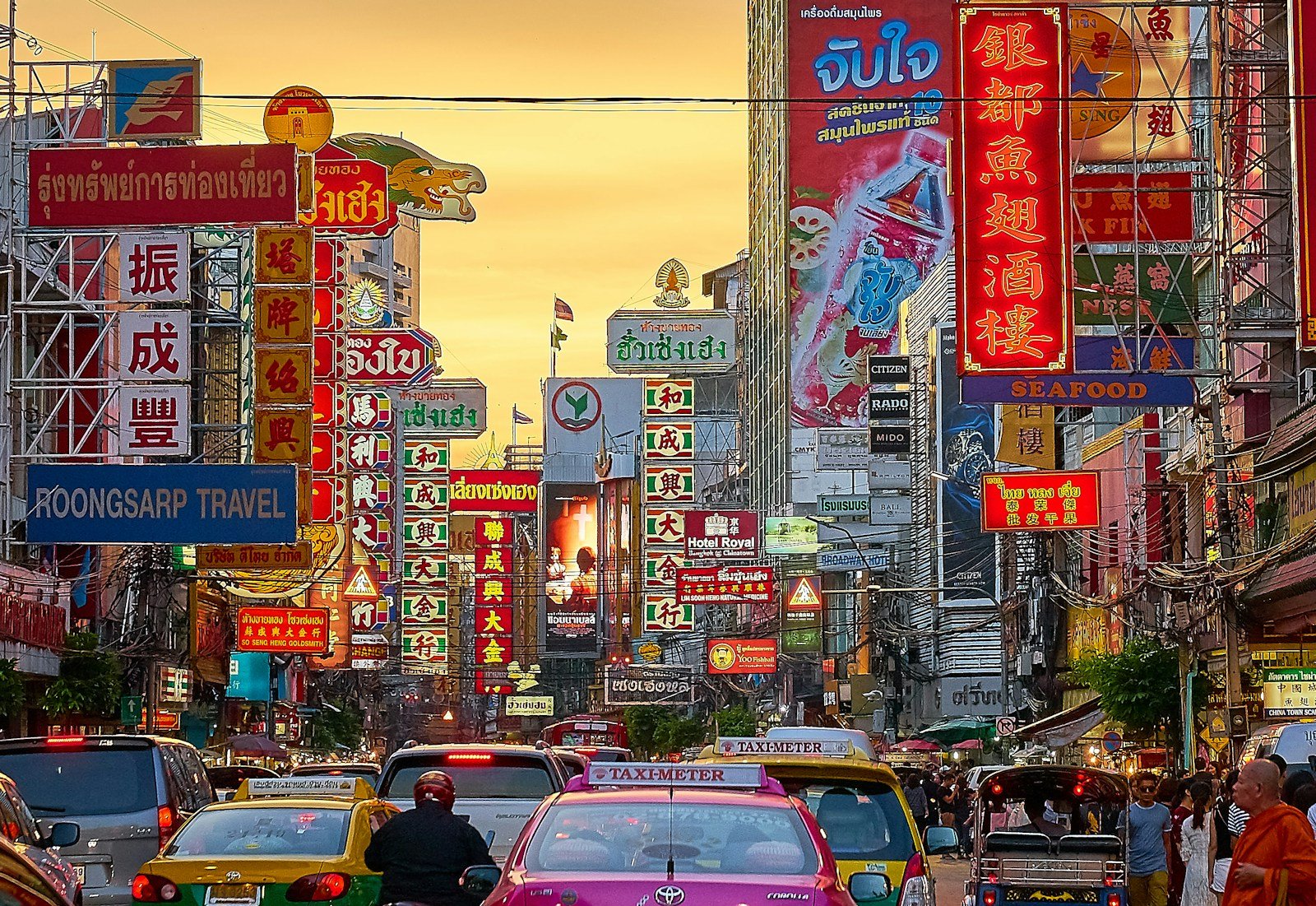
Start with a ride on the orange-flag Chao Phraya Express Boat, which gives you a view of the riverside temples and neighborhoods for a flat 19-baht fare. Get off at a pier near Chinatown.
Spend the late morning walking Chinatown's lanes, markets, and shophouses. Go back to your hotel during the hottest hours.
Return in the evening, when Yaowarat Road fills with food stalls. Choose busy stalls where food is cooked fresh, and keep your belongings close in the crowds.
Day 3: Chatuchak and modern Bangkok
Route: Chatuchak Weekend Market in the morning → lunch → Lumphini Park or the Siam area in the afternoon.
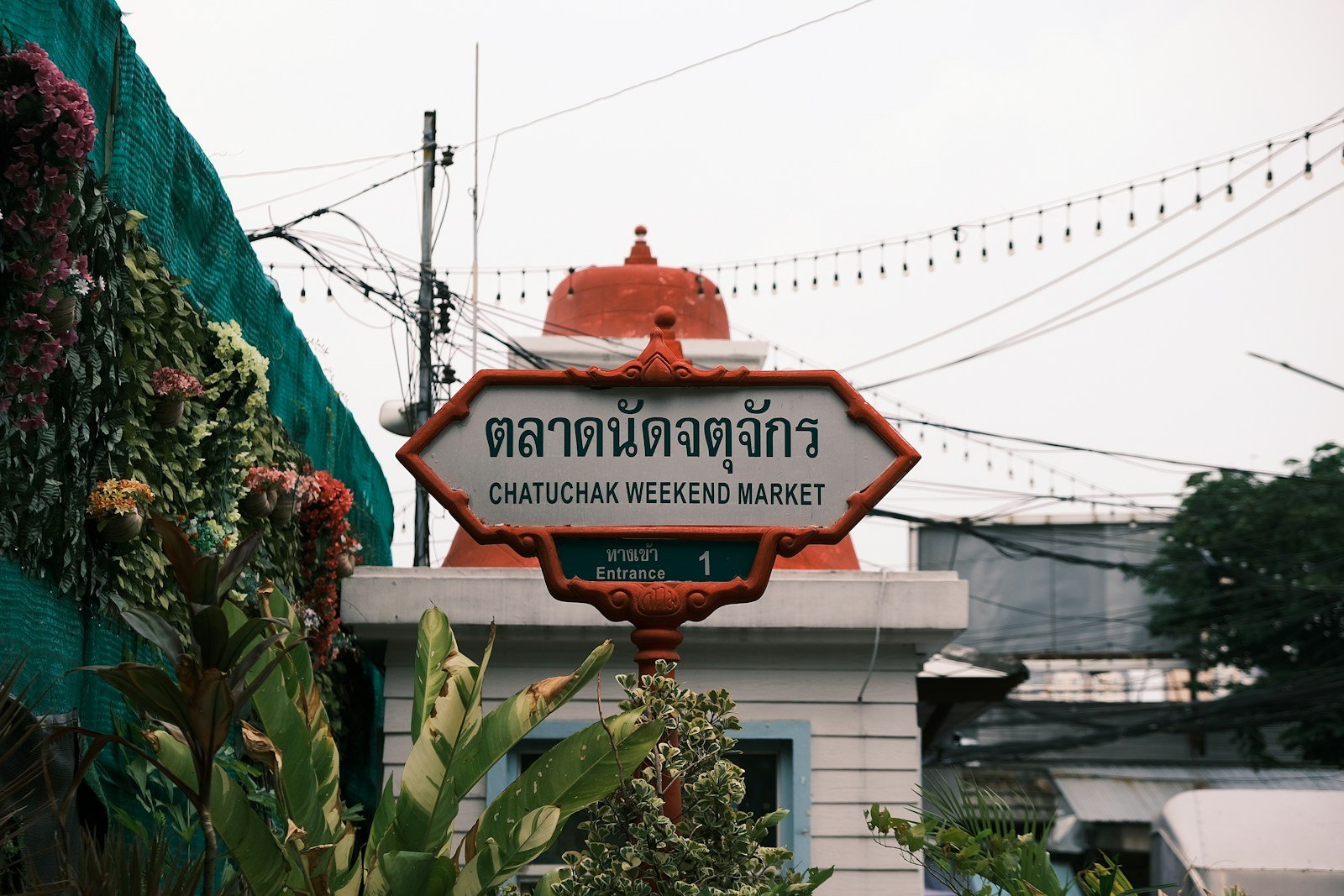
The main Chatuchak Weekend Market runs on Saturdays and Sundays; specialized weekday trading is not the same full-market experience. It's near BTS Mo Chit and MRT Chatuchak Park stations. Go early, before the heat builds, and carry small bills and water.
In the afternoon, take the BTS or MRT to Lumphini Park for a shaded walk, or to the Siam area, where large malls offer air-conditioned shopping and food courts.
Move Chatuchak to your Saturday or Sunday. If none of your four days falls on a weekend, replace it with Lumphini Park and the Siam area; swapping weekdays will not make the weekend market open.
Day 4: Ayutthaya
Route: Early departure → Ayutthaya Historical Park → back to Bangkok before dark.
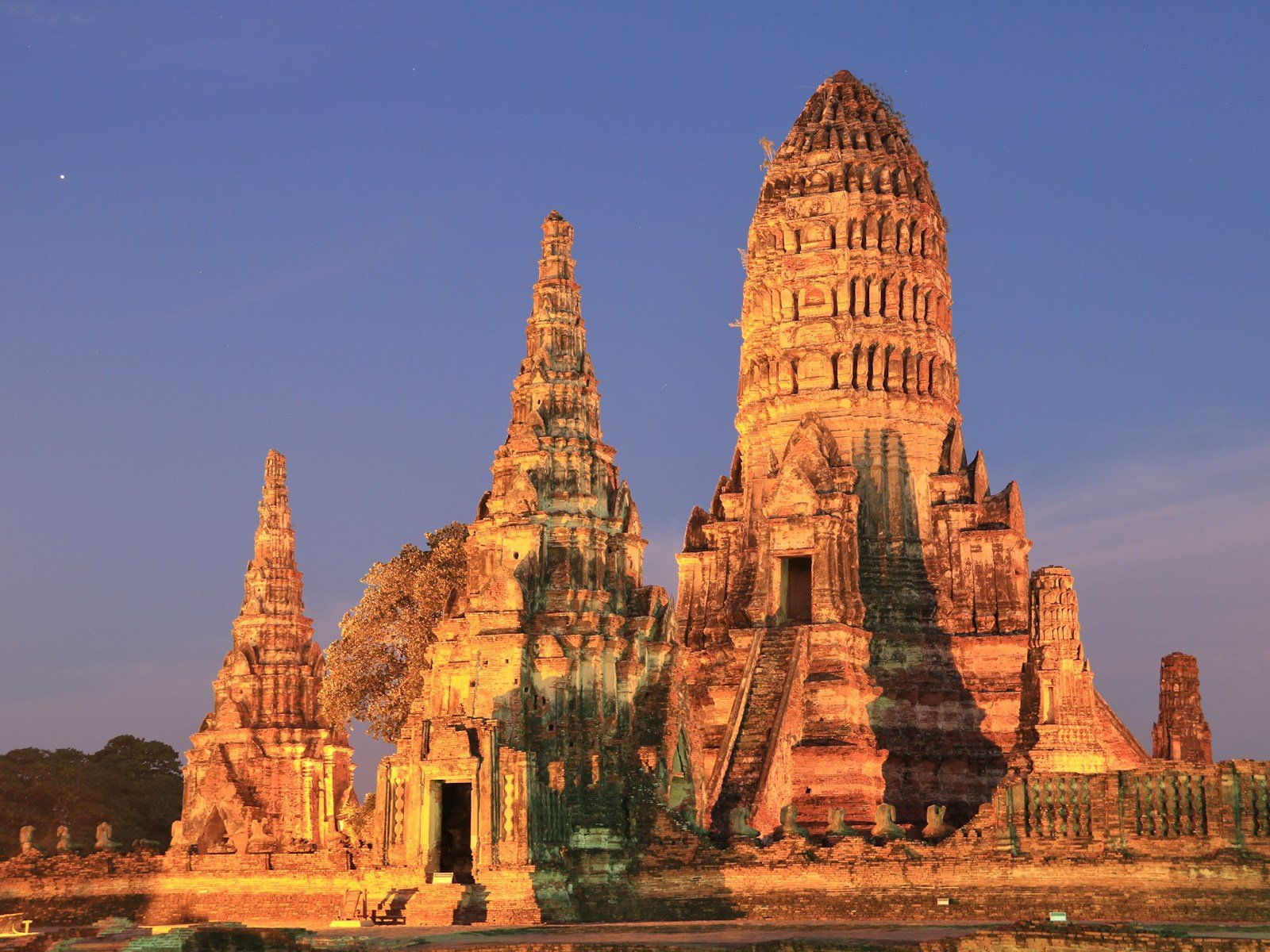
Ayutthaya, a former royal capital and a UNESCO World Heritage site, lies about 50 miles (80 km) north of Bangkok. Its temple ruins are spread across the historical park, and individual temples charge their own entry fees, so check current prices on arrival.
You can get there by train, by minivan, or on a tour. Train departures and stations have changed in recent years, so check the current timetable with the State Railway of Thailand. Start early, since the ruins have little shade, and bring a hat, sunscreen, and water.
The same dress code applies at active temples: covered shoulders and knees.
Keep / Swap / Skip
| Your situation | Keep | Swap | Skip |
|---|---|---|---|
| No weekend on your trip | Lumphini Park, Siam | Replace Chatuchak with a second river or Chinatown morning | Chatuchak |
| The Grand Palace is closed for a ceremony | Wat Pho, Wat Arun | Move the Grand Palace to another day | Unofficial "alternative tours" offered outside |
| A very hot day | Morning sights | A midday break at your hotel or a mall | Long afternoon walks |
| Poor air quality (often Dec–Feb) | Indoor sights, malls | A shorter outdoor day | Long outdoor walks |
| Limited walking | One temple visit matched to your access needs | Check step-free entrances, on-site distances and boarding access before choosing transport | Combining all three temples or walking all of Chatuchak |
| Only three days | Days 1–3 | — | Ayutthaya |
Your preparation checklist
- Check Thailand's current entry rules with the Thai embassy or consulate.
- Complete the TDAC on the official site within the three-day window including your arrival date.
- Pack clothes that cover shoulders and knees for temple days.
- Plan Day 1 around the Grand Palace's 3:30 p.m. ticket cutoff.
- Put Chatuchak on a Saturday or Sunday.
- Set up mobile data before you land.
- Read the State Department advisory and check air quality in winter.
Planning sources
Key booking and rule sources checked October 27, 2026: Thai visa information · TDAC submission window · Grand Palace visitor rules · Rail timetable. Check the provider’s calendar for the date you intend to travel.
Frequently asked questions
Is four days enough for Bangkok?
Yes, for a first visit covering the main temples, the river, Chinatown, a market, and one day trip. Add a day for a slower pace or a second day trip.
What should I wear to the Grand Palace?
Wear a sleeved, opaque top and long trousers or a long skirt, with shoulders and knees covered. Avoid torn or tight trousers and arrive properly dressed; do not count on borrowing cover-ups at the entrance.
What time does the Grand Palace close?
Ticket sales run from 8:30 a.m. to 3:30 p.m., and the complex closes around 4:30 p.m. It can close for royal ceremonies, so check before you go.
Do U.S. citizens need a visa for Thailand?
For tourism, U.S. citizens can enter without a visa for up to 30 days, as of September 15, 2026. You also need to complete the Thailand Digital Arrival Card before arrival. Rules change, so confirm with the Thai embassy before you book.
How do I get from Suvarnabhumi Airport to the city?
Take the Airport Rail Link to Phaya Thai and change to the BTS Skytrain, or use an official metered taxi.
Is Bangkok safe for tourists?
The U.S. State Department rates Thailand at Level 1, "exercise normal precautions," with higher levels only for the Cambodia border region and three southern provinces. It warns about bar-tab scams, pickpocketing, and taxi overcharging in Bangkok, and advises avoiding protests. Check the latest advisory before you go.
When is the best time to visit Bangkok?
The cooler, drier months are roughly November to February. The State Department notes that dust and vehicle pollution are common from December to February, so check air quality if that matters to you.
Before you go
Check the entry rules, complete your TDAC, and pack temple-ready clothes. Four days in Bangkok work best with early starts, one area a day, and a break during the hottest hours.