
The short answer: where to stay in Istanbul
For a first visit, start with one of four bases:
- Sultanahmet: Walk to Hagia Sophia, the Blue Mosque, Topkapı Palace, and the Basilica Cistern.
- Sirkeci and Eminönü: Next to the ferries, the tram, and the Marmaray rail line, a short walk from Sultanahmet.
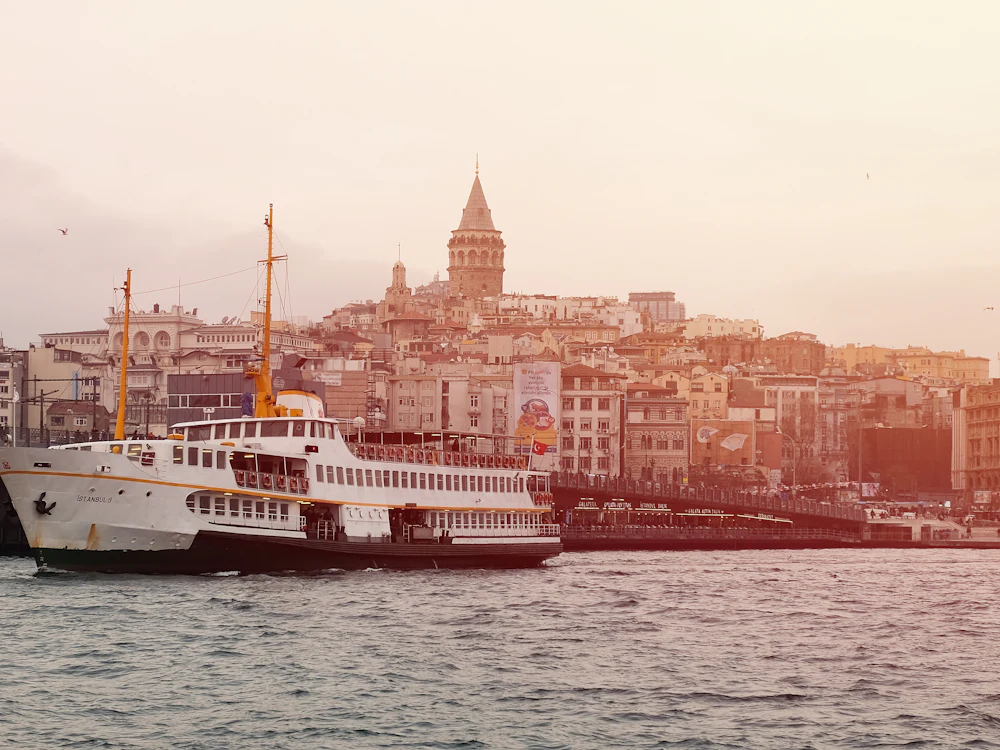
- Karaköy and Galata: Restaurants, cafés, and the waterfront, one tram stop across the bridge from the old city. Expect hills.
- Kadıköy (Asian side): A lively local neighborhood with ferries across the Bosphorus, with a direct metro link to Sabiha Gökçen Airport.
Pick the base that matches most of your days, check how far the address is from a tram stop or ferry pier, and read the U.S. State Department's current advisory before you book.
This guide compares areas, not hotels. For mosques, museums, and transit cards, see our first time in Istanbul guide.
Jump to
- Istanbul neighborhoods at a glance
- How the city is laid out
- What matters more than the neighborhood name
- Choose your base: a quick guide
- The four strongest first-time bases
- Three alternatives worth a look
- airport changes the answer
- Compare stays in your chosen area
- How to test a specific hotel address
- hotel-address checklist
- FAQ
Istanbul neighborhoods at a glance
| Area | Side | Best for | Walk to | Transit examples | Evenings | Main trade-off |
|---|---|---|---|---|---|---|
| Sultanahmet | European, historic peninsula | Major historic sights on foot | Hagia Sophia, Topkapı, Basilica Cistern | T1 tram | Quieter after the sights close | Fewer evening options; busy with tours by day |
| Sirkeci and Eminönü | European, historic peninsula | Ferries, rail, and the old city | Spice Bazaar, Galata Bridge, Sultanahmet | T1 tram, Marmaray, ferries | Busy until shops close | Crowds and traffic by day |
| Karaköy and Galata | European, across the Golden Horn | Food, cafés, the waterfront | Galata Tower, Galata Bridge | T1 tram, ferries, historic Tünel funicular | Lively | Steep hills; some streets noisy |
| Kadıköy | Asian | A local base, food markets, ferry days | Moda, the Kadıköy market streets | Ferries, M4; transfer for Marmaray | Lively | A ferry crossing to most historic sights |
| Beyoğlu and Cihangir | European | Nightlife, İstiklal Avenue | Taksim, İstiklal | M2 metro, F1 funicular | Very lively | Noise; hills; crowds on İstiklal |
| Beşiktaş | European | A busy, local waterfront base | Dolmabahçe, the Bosphorus shore | Ferries, buses | Lively | Farther from the old city |
| Nişantaşı | European | Shopping and a polished base | Boutiques, cafés | M2 metro (Osmanbey) | Restaurants, quieter side streets | Extra travel to the historic sights |
This table is editorial guidance, not measured data, and not a safety ranking. Details checked October 27, 2026.
How the city is laid out
Istanbul spreads across two continents, divided by the Bosphorus strait. On the European side, the Golden Horn inlet separates the historic peninsula (Sultanahmet, Sirkeci, Eminönü) from the central European side (Karaköy, Galata, Beyoğlu, Beşiktaş). The Asian side (Kadıköy, Üsküdar) is across the Bosphorus, linked by ferries and rail.
Three things shape every choice:
- Hills. Galata and the climbs from Karaköy toward Beyoğlu and Cihangir can be steep. Karaköy’s waterfront itself is easier to navigate. A hotel "a five-minute walk" from the tram may be five minutes uphill.
- Traffic. Road trips across the city can be slow. Trams, metros, Marmaray, and ferries are often faster.
- The ferries. They connect Eminönü, Karaköy, Beşiktaş, and Kadıköy, and they double as a Bosphorus view.
What matters more than the neighborhood name
- Distance to a tram stop or ferry pier. This decides how easy every day feels.
- The slope. Check the street on a map with terrain or street view, especially with luggage.
- Your main plans. If most of your days are in the old city, staying there saves crossings.
- Evening character. Some areas get quiet at night; others stay loud.
- Your airport. Istanbul has two, on opposite sides of the city.
Choose your base: a quick guide
| If you want… | Start with | Check before booking |
|---|---|---|
| The major historic sights on foot | Sultanahmet | Evening dining options nearby |
| Ferries and rail at your door | Sirkeci or Eminönü | Street noise and daytime crowds |
| Restaurants and cafés, close to the old city | Karaköy or Galata | The slope from the tram stop |
| A local neighborhood on the Asian side | Kadıköy | How many days you'll cross to the old city |
| Nightlife | Beyoğlu or Cihangir | Room location and noise |
| A Sabiha Gökçen arrival | Kadıköy | Your route from the M4 metro |
The four strongest first-time bases
Sultanahmet
Why it works: Hagia Sophia, the Blue Mosque, Topkapı Palace, and the Basilica Cistern are within walking distance of one another. You can start early, before tour groups arrive.
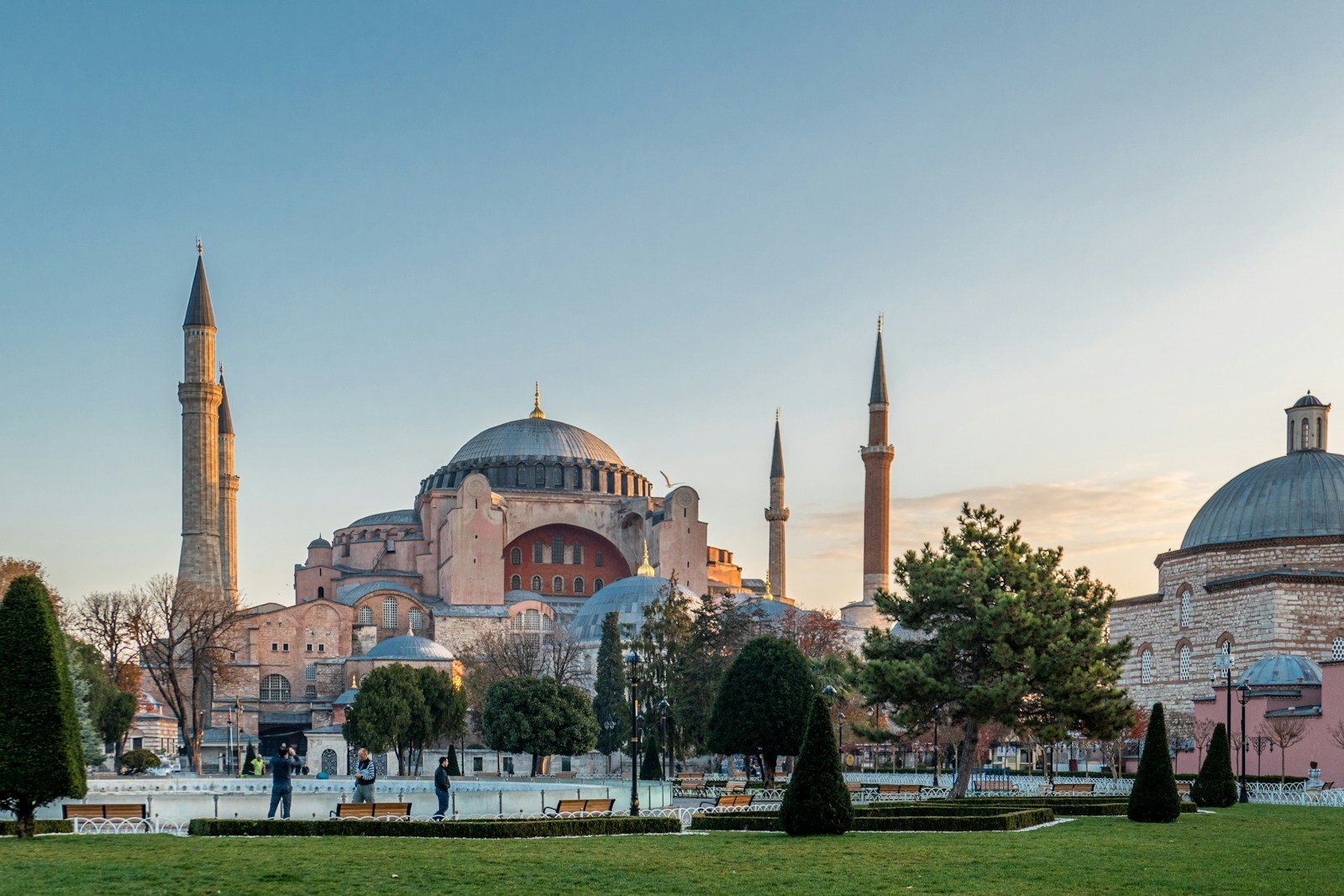
Main drawbacks: Once the sights close, the area gets quieter, with fewer evening options than Karaköy or Kadıköy. Expect tour crowds and persistent invitations into shops by day; a polite "no, thank you" is enough.
Getting around: The T1 tram stops in Sultanahmet and continues to Eminönü, Karaköy, and Kabataş.
Choose it if: Seeing the historic sights early and on foot is your top priority.
Skip it if: You want lively streets and a wide choice of restaurants every evening.
Address test: Check the walk to the Sultanahmet tram stop, and whether the street is steep or cobbled.
Sirkeci and Eminönü
Why it works: You're beside the Eminönü ferry piers, the T1 tram, and Sirkeci's Marmaray station, with the Spice Bazaar and Galata Bridge nearby and Sultanahmet a short walk uphill.
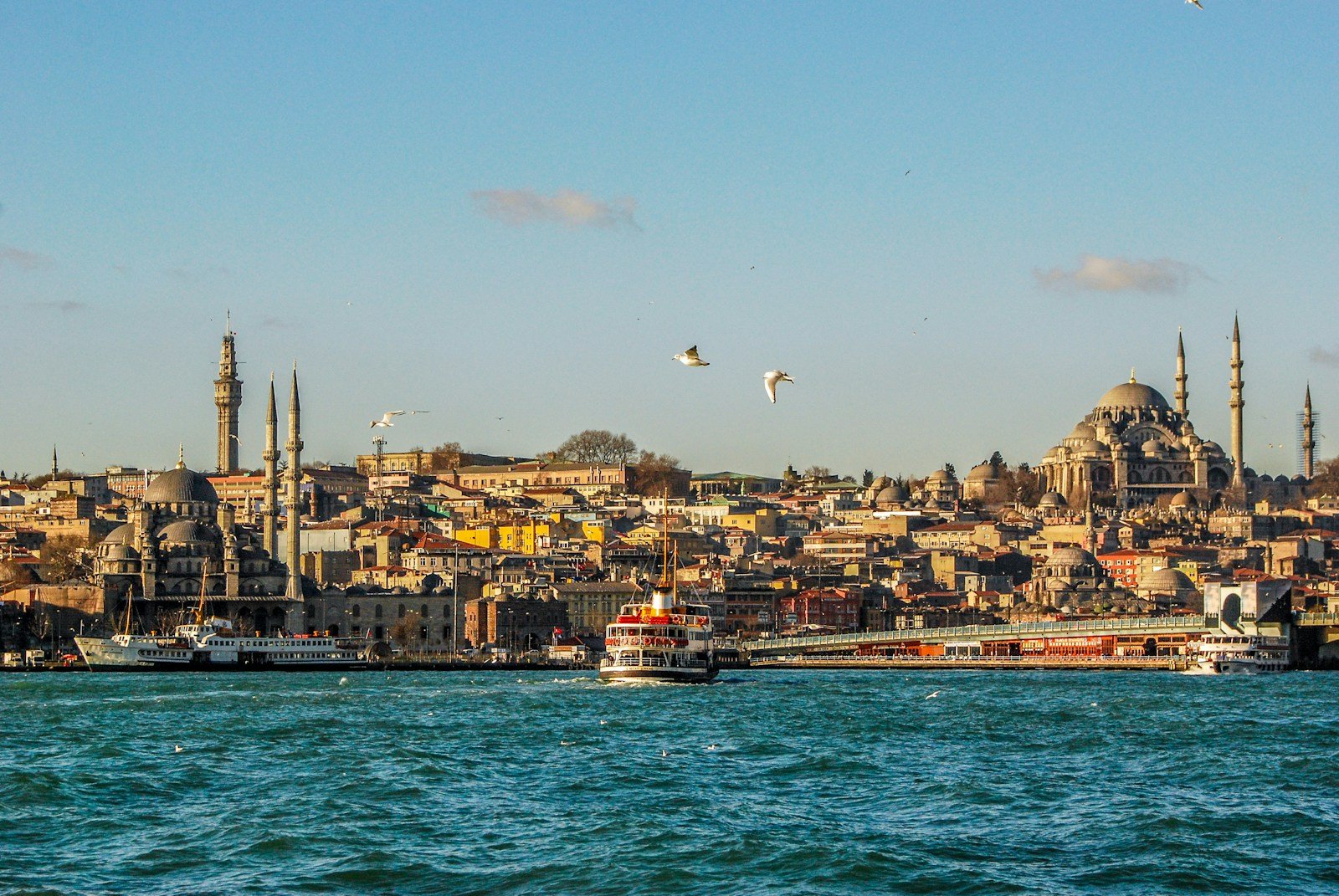
Main drawbacks: Streets are crowded and busy with traffic during the day.
Getting around: Ferries, the T1 tram, and Marmaray rail, which crosses under the Bosphorus to the Asian side.
Choose it if: You want transit options in every direction and the old city on foot.
Skip it if: You want a calm street outside your door.
Address test: Check whether the hotel is on a main road or a side street, and ask for a quiet room.
Karaköy and Galata
Why it works: Karaköy is one tram stop across the Galata Bridge from Eminönü, with cafés, restaurants, and the ferry pier. Galata, uphill around Galata Tower, has narrow streets and views.
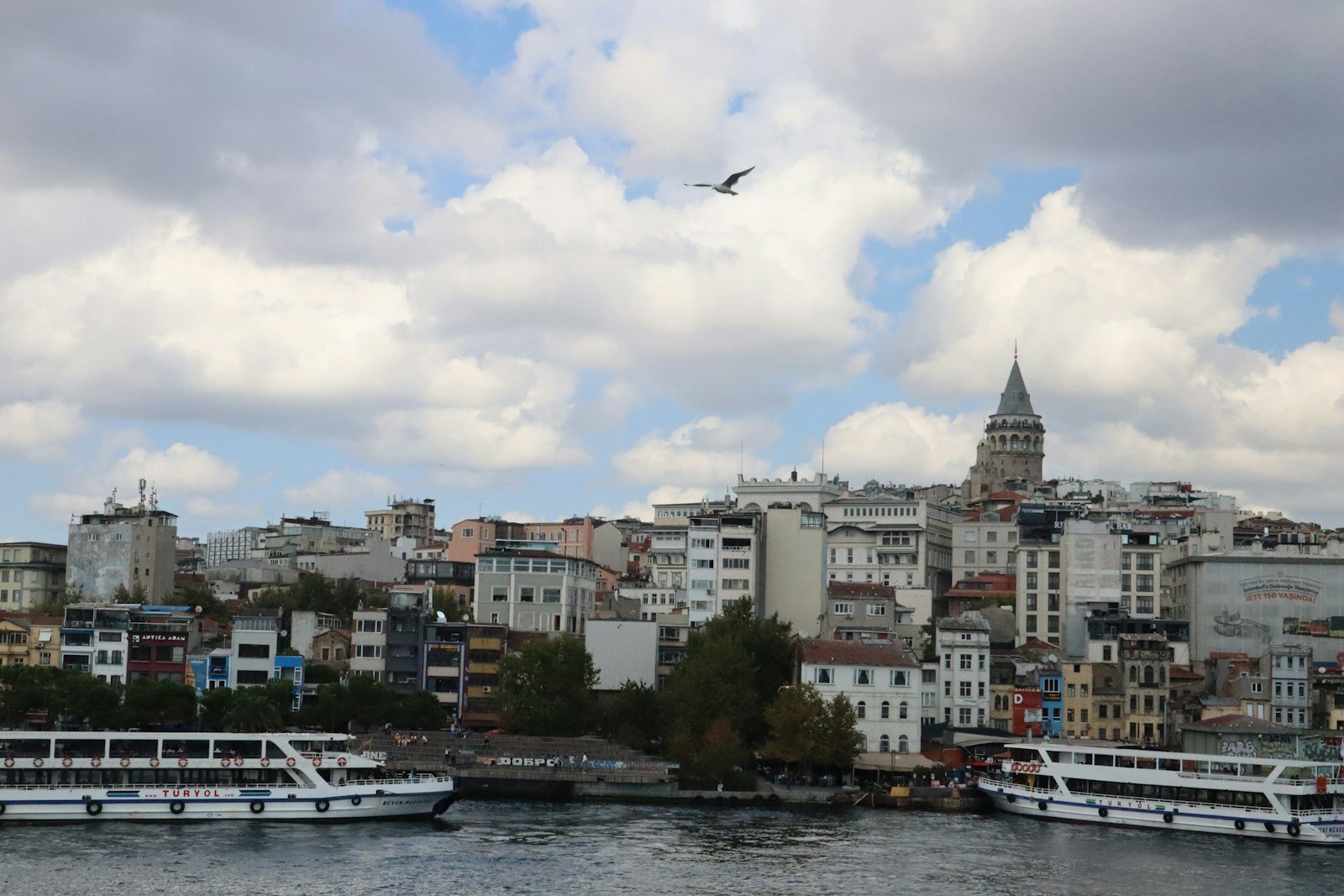
Main drawbacks: The hills are steep, and some streets stay lively late.
Getting around: The T1 tram and the Karaköy ferry pier. The historic Tünel funicular climbs from Karaköy toward İstiklal Avenue.
Choose it if: You want restaurants nearby and an easy hop to the old city.
Skip it if: You have limited mobility or heavy luggage and the address is uphill.
Address test: Map the walk from the Karaköy tram stop or the Tünel funicular, and look at the slope.
Kadıköy (Asian side)
Why it works: Kadıköy is a busy local neighborhood with food market streets and the Moda waterfront nearby. Ferries cross to Eminönü and Karaköy, so your commute comes with a Bosphorus view.
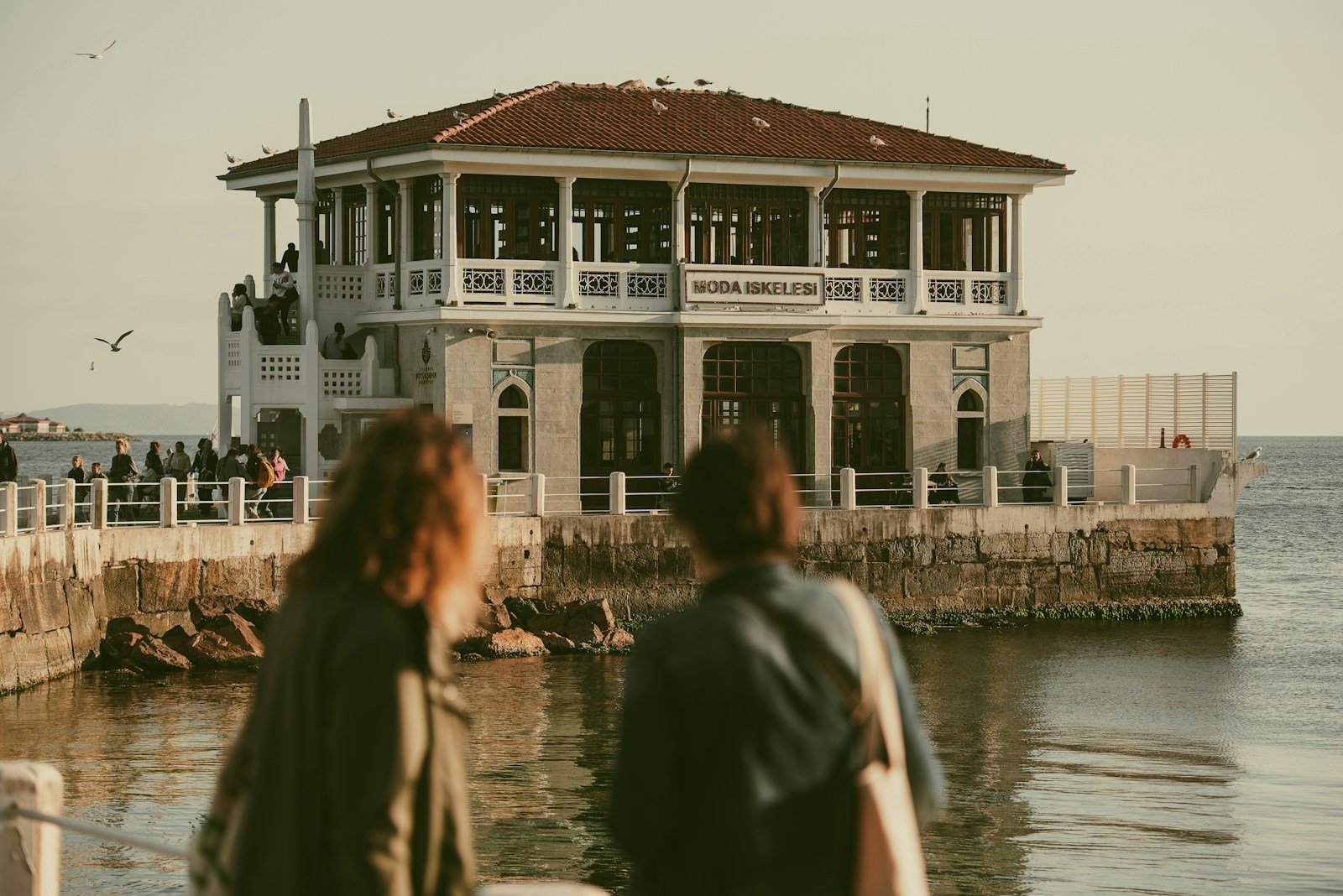
Main drawbacks: Most classic historic sights are across the water, so you'll cross most days.
Getting around: Ferries from the Kadıköy pier, the M4 metro to Sabiha Gökçen Airport, and Marmaray at Ayrılık Çeşmesi.
Choose it if: You're arriving at Sabiha Gökçen, staying longer, or want a local base.
Skip it if: This is a short first trip focused on the historic sights.
Address test: Check the walk to the Kadıköy ferry pier and the last ferry times for your evenings.
Three alternatives worth a look
Beyoğlu and Cihangir. Around İstiklal Avenue and Taksim, with many bars and restaurants, and Cihangir's steep residential streets nearby. Choose it if nightlife matters. Skip it if you're a light sleeper or don't like hills.
Beşiktaş. A busy local waterfront district with ferries and Dolmabahçe Palace nearby. Choose it if you've visited before or want a local feel on the European side. Skip it if your days are mostly in the old city.
Nişantaşı. A polished shopping area with boutiques and cafés, on the M2 metro at Osmanbey. Choose it if shopping and a quieter evening matter more than walking to sights. Skip it if this is a short first trip.
Your airport changes the answer
Istanbul has two airports on opposite sides of the city:
- Istanbul Airport (IST) is on the European side. The M11 metro connects it with Gayrettepe, where you can change to the M2. Havaist buses serve several city destinations; check the current route and stop for your hotel.
- Sabiha Gökçen (SAW) is on the Asian side. The M4 metro connects it with Kadıköy. For Sirkeci and the old city, compare changing from M4 to Marmaray at Ayrılık Çeşmesi, then plan the final walk or tram journey from Sirkeci to your hotel.
Neither airport has a direct train to Sultanahmet. For a late SAW arrival, compare staying in Kadıköy with a prearranged transfer to your main hotel. Check the final connection and hotel check-in time, not just the airport train: overnight service varies by line and day. If you use a ride-hailing app, confirm that pickups are allowed at your terminal and follow its meeting-point instructions.
Stay connected: Maps and ride-share apps need data from the moment you land. Our international eSIM guide explains what to check.
What the official advisory says
The U.S. State Department's Türkiye advisory (issued June 9, 2026) rates Türkiye at Level 2: Exercise increased caution, citing terrorism, armed conflict, and arbitrary detentions. It rates the area within 6 miles (10 km) of the borders with Syria and Iraq at Level 4: Do not travel. Istanbul isn't in that area.
Its practical guidance includes:
- Crowded places: Be careful at transport hubs, markets, malls, hotels, restaurants, and major events.
- Demonstrations: Avoid protests, which can turn violent without warning.
- Taxis: Ride-hailing apps can help arrange a car and reduce overcharging risks. Confirm pickup rules and whether payment is by card or cash.
- Restaurants: Choose well-established places and ask for a priced menu before ordering.
- Theft: Watch for pickpocketing and bag-snatching in tourist areas.
- Alcohol: Buy only from licensed sources.
- Emergencies: Dial 112.
We don't rank neighborhoods by safety. Read the full advisory before you book, since it can change. Our travel insurance guide explains what to check in a policy.
Compare stays in your chosen area
Once you've picked an area, compare properties and total prices for your dates, and look at the map, not just the neighborhood name in the listing.
Deciding between a hotel and an apartment? Our hotel vs. vacation rental guide walks through the trade-offs.
Your Istanbul neighborhood shortlist
Compare stays in the area you chose
Open the map for your dates and compare addresses in Sultanahmet, Sirkeci, Karaköy or Kadıköy against your own plans. Check the actual entrance and walk to a tram stop, metro station or ferry pier before choosing a room.
Compare the total price, cancellation policy, room access and recent noise reviews. The city results are a starting point; they are not a shortlist of hotels we have inspected.
Affiliate link: BoardingNotes may earn a commission if you purchase through this link.
Compare Istanbul stays for your datesHow to test a specific hotel address
- Find the exact address and entrance on a map.
- Measure the walk to the nearest tram stop, metro station, or ferry pier.
- Check the slope with a terrain map or street view, especially with luggage.
- Route your real plans: the old city, a ferry day, and your airport.
- Read recent reviews for noise, then confirm elevator access to your booked room and late check-in directly with the property.
- Confirm the total price and cancellation terms. Our hotel booking mistakes guide lists what to check.
Your hotel-address checklist
- The exact address and entrance are confirmed.
- You know the walk to the nearest tram stop, metro, or ferry pier.
- You've checked the slope.
- You know your route from your arrival airport.
- Your room location suits your sleep.
- The total price and cancellation terms are clear.
- You've read the latest State Department advisory.
Planning sources
Transport connections and the linked advisory reviewed November 7, 2026: Istanbul metro network · City ferry timetables · Türkiye advisory. Check the provider’s timetable and service notices for your travel date.
Frequently asked questions
What is the best area to stay in Istanbul for a first visit?
There isn't one best area for everyone. Sultanahmet suits travelers who want the historic sights on foot. Karaköy and Galata suit travelers who want restaurants close to the old city. Kadıköy suits a local base on the Asian side.
Is Sultanahmet a good place to stay?
Yes, if your priority is seeing the historic sights early and on foot. It gets quieter in the evening, with fewer restaurants than Karaköy or Kadıköy.
Should I stay on the European or Asian side?
For a short first trip focused on historic sights, the European side saves crossings. The Asian side, especially Kadıköy, suits a longer stay or an arrival at Sabiha Gökçen Airport.
Which area is best near Istanbul Airport?
None of the main neighborhoods is close. The M11 metro connects the airport with Gayrettepe and the M2 line, and Havaist serves several city destinations; check the current stops.
Which area is safest in Istanbul?
We don't rank neighborhoods by safety. The U.S. State Department rates Türkiye at Level 2, "exercise increased caution," and advises care in crowded places and avoiding protests. Read the full advisory before you go.
Is Galata too hilly?
The streets around Galata Tower are steep. If you have limited mobility or heavy luggage, check the slope from the nearest tram stop or funicular before booking.
Before you go
Pick the base that matches most of your days, check the walk to the nearest tram or ferry, and look at the slope. Then read the official advisory and compare stays for your dates.