
A fall travel capsule wardrobe is a small set of clothes you can combine, layer, and rewear across your trip. The useful part is having an outfit for the day ahead without packing a separate look for every possibility.
Start with your forecast, walking plans, and laundry access. Then choose pieces that work together. This guide builds a practical example for five to seven days of casual city sightseeing, with a packing table, outfit combinations, and adjustments for rain or colder evenings. It is not a winter expedition or technical hiking list.
Your fall capsule at a glance
Example starting point: four tops, two bottoms, two midlayers, one rain shell, and two pairs of shoes. That is nine main garments plus footwear; underwear, sleepwear, and accessories are listed separately.
- Check morning, afternoon, and evening conditions, including wind and rain.
- Choose tops that work with both bottoms, and try your layers on together.
- Plan one laundry session around day three or four.
- Count the clothes you wear while traveling as part of the capsule.
- Adapt the example to your comfort, activities, and actual baggage allowance.
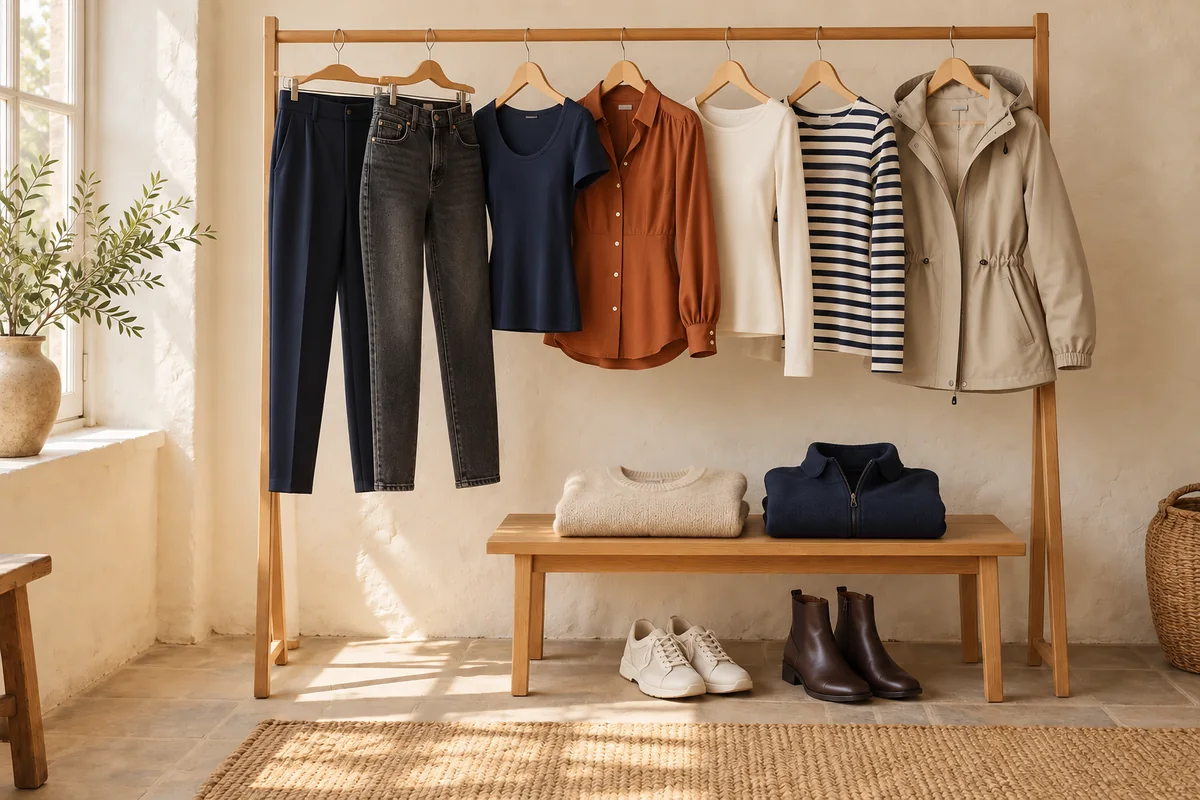
Cover image: AI-generated illustration for BoardingNotes.
Jump to: Conditions · Packing list · Layers · Outfits · Adjustments · Checklist · FAQs
1. Check the conditions you will actually travel in
“Fall” is a season, not a temperature range. A week in a warm coastal city can call for a different wardrobe from a trip with chilly inland evenings. Even within one destination, sitting outdoors and walking uphill are different clothing situations.
Look at the forecast for each overnight stop and any day trip that changes elevation or exposure. Read the hours when you expect to be outside, rather than only the daily high. The Met Office forecast guide explains that its “feels like” figure accounts for wind and humidity; the headline air temperature does not tell the whole story.
Write down four things before choosing clothes:
- Your coldest planned outing: an early departure, evening walk, or outdoor meal.
- Your wettest likely day: brief transfers between buildings or several hours outdoors.
- Your activities: walking, museums, casual dinners, and any specific dress requirements.
- Your laundry opportunity: where you can wash, what equipment is available, and when clothes can dry.
Use seasonal averages for early planning, then review the forecast close to departure. If your plans include freezing conditions, snow, or exposed trails, replace this city capsule with clothing and equipment suited to that activity. If Kyoto is your destination, use the Kyoto in fall itinerary to check which outdoor outings your layers need to support.
2. Build a fall travel capsule wardrobe from clothes you own
Choose two bottoms first. They set the fit, colors, and shoes that the rest of the wardrobe needs to work with. Add four tops you would happily wear with either bottom. Then choose warmth and rain protection around those combinations.
A simple palette makes this easier: navy and charcoal as the main colors, cream as a lighter neutral, and muted rust as an accent. Those colors are only an example. Black, denim blue, olive, brighter shades, or patterns can work if the pieces actually combine.
Try every top with both bottoms. Sit down, bend, and reach overhead. Check that necklines sit comfortably under the sweater and that sleeves do not bunch beneath the fleece. A favorite piece earns its place by working on your trip, not by matching a picture.
An example packing list for five to seven days
This example assumes casual sightseeing, rewearing suitable outer clothing, and one laundry session around day three or four. It contains nine main garments and two pairs of shoes. The travel-day column keeps worn items from being counted twice.
| Category | Example pieces and purpose | Wear on travel day | Pack |
|---|---|---|---|
| 4 tops | Cream long-sleeve top; navy-and-cream striped long-sleeve top; navy short-sleeve tee; rust button-up shirt | Cream top | Other 3 tops |
| 2 bottoms | Navy trousers for everyday and casual dinners; charcoal jeans for another comfortable option | Navy trousers | Charcoal jeans |
| 2 midlayers | Oatmeal sweater for everyday warmth; navy zip fleece for adjustable layering | Oatmeal sweater, if comfortable | Navy fleece |
| 1 outer layer | Stone-colored hooded rain shell, chosen for the expected conditions | — | Rain shell, easy to reach |
| 2 pairs of shoes | Off-white walking sneakers; dark, low-heeled ankle boots already comfortable for your itinerary | Sneakers | Ankle boots |
In this arrangement, you wear three main garments and one pair of shoes, and pack six main garments and one pair of shoes. If the departure weather is warm, put the sweater in your bag instead; it remains the same capsule.
Add the items outside the main garment count
- Underwear and socks: five of each, including the set worn on departure, as a starting point with the planned wash. Add more if you change more often.
- Bras or other support garments: include the styles and quantity you need; for example, two everyday bras if those suit your routine.
- Sleepwear: one set suitable for your accommodation.
- Accessories: one scarf and any belt your chosen clothes require. Add a hat or gloves when the forecast and your comfort call for them.
These quantities are planning choices, not a rule about how often anyone should change clothes. Make room for individual comfort, accessibility, modesty, and clothing needs. A skirt or dress can replace a listed piece if you also check its layers and footwear; record any tights or additional garments it needs.
3. Choose fabrics and fall travel layers by function
Think in three jobs: a layer next to your skin, a layer that adds warmth, and an outer layer for weather. The National Park Service’s layering guidance uses this same distinction. For a city trip, the pieces can look like ordinary everyday clothes.
You do not need to wear all three layers continuously. A tee may be enough inside a warm museum; a sweater and shell can go back on before an evening walk. Choose closures and fits that make those changes easy.
Balance fabric comfort, drying, and care
Wool or merino: consider these for a next-to-skin top or sweater if they feel comfortable. Check the actual garment against your laundry plan. “Wool” does not mean every item can go into the same wash or dryer; Woolmark’s washing guidance makes care-label instructions central.
Synthetic tops and fleece: these are another option for your active-day layers. Look at the garment’s stated care requirements, thickness, fit, and how it performs in your own wear-and-wash trial. A familiar top can be more useful than a new technical item whose comfort you have not checked.
Cotton and denim: keep favorite pieces for suitable dry city days, but do not make them your only option for prolonged cold, wet outings. NPS cold-weather guidance favors wool or synthetics over cotton because cotton readily absorbs moisture. For a rain-heavy itinerary, swapping the jeans for suitable non-denim trousers may be more practical.
No fiber name guarantees warmth, softness, or a particular drying time. Construction, thickness, garment fit, the weather, and your preferences all affect the choice. Wash a proposed travel top at home and see whether its care routine fits your trip.
Make the outer layer work over the clothes beneath it
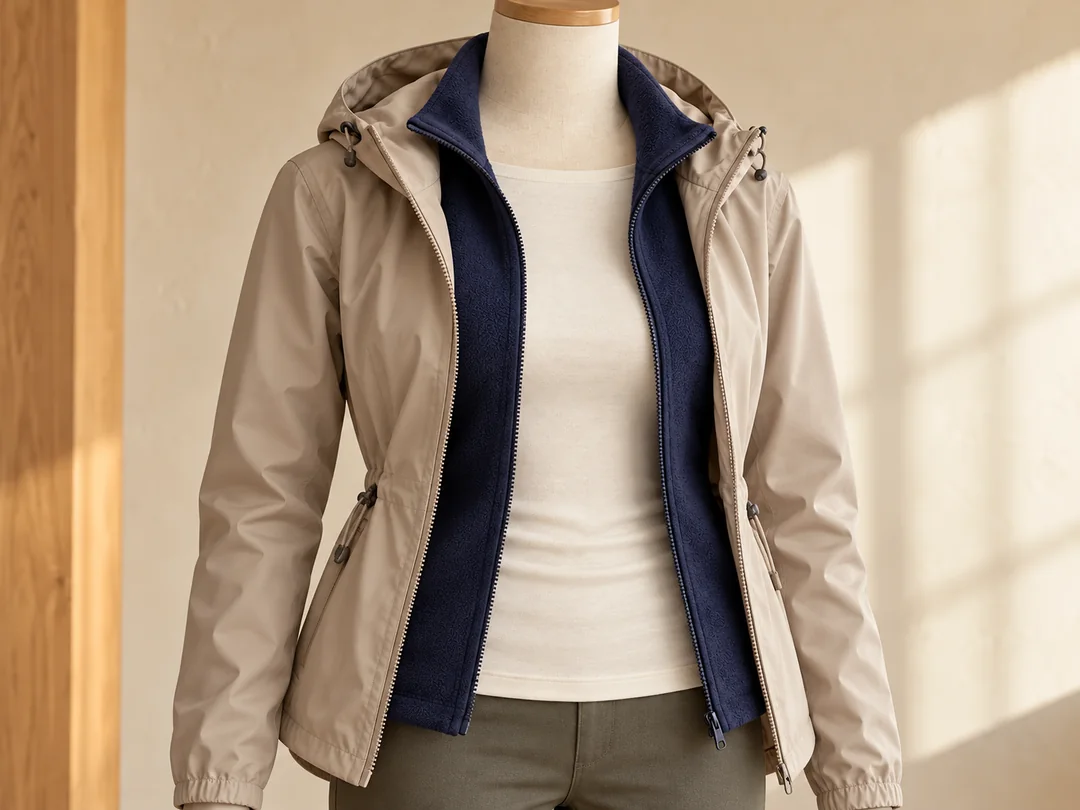
Try the shell over your intended top and midlayer with the zipper closed. You should be able to move comfortably, use the pockets, and turn your head with the hood up. Choose rain protection from the garment’s specification, not its color or how outdoorsy it looks.
Surface water beading is not the same thing as the waterproof barrier. In its technical explanation of DWR, Gore distinguishes the water-repellent surface treatment from the membrane in its waterproof products. Use the maker’s description and care instructions for the jacket you actually own.
Choose shoes around your longest walking day
Two pairs are an option, not an obligation. The example uses sneakers for everyday walking and ankle boots for an alternative look or conditions they are designed to handle. Boots are not automatically waterproof or comfortable, and sneakers are not automatically unsuitable for fall.
Try each pair with the socks you will pack and on a representative walk before departure. Check fit, pressure points, and the condition of the soles. If your second pair adds no useful function, leave it out. If rain is likely, choose footwear with stated weather protection suited to your plans.
4. Turn the same capsule into seven days of outfits
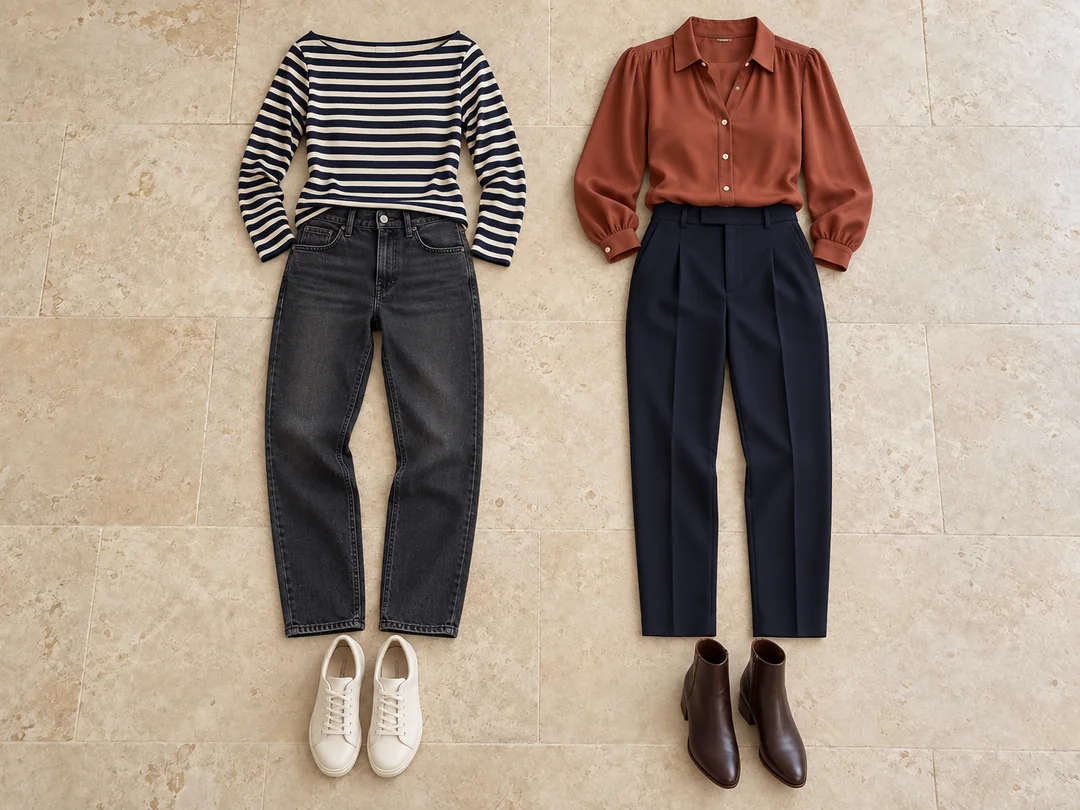
Lay out complete combinations before putting anything in the bag. The examples below use only the main pieces already listed. They show variety without adding a dress, an extra jacket, or another pair of shoes halfway through the plan.
| Day or situation | Top and bottom | Layer and footwear |
|---|---|---|
| 1 · Travel and arrival | Cream long-sleeve top + navy trousers | Oatmeal sweater as needed + sneakers |
| 2 · Casual sightseeing | Striped long-sleeve top + charcoal jeans | Navy fleece as needed + sneakers |
| 3 · Walking and museums | Navy tee + navy trousers | Oatmeal sweater as needed + sneakers |
| 4 · City day and casual dinner | Rust shirt + navy trousers | Oatmeal sweater as needed + ankle boots |
| 5 · Cooler outing | Clean cream top + charcoal jeans | Navy fleece + ankle boots |
| 6 · Another sightseeing day | Clean striped top + navy trousers | Oatmeal sweater as needed + sneakers |
| 7 · Departure | Clean navy tee + whichever bottom is ready | Navy fleece as needed + sneakers |
Add the same rain shell whenever conditions call for it. Change the sequence to match the forecast and wash the early-trip tops before their later appearances. Rewear bottoms and midlayers only when they are clean and suitable to wear again; use an available clean alternative while laundry dries.
For a five-day trip, use the first five combinations and adjust laundry accordingly. For a longer trip, repeat a workable wash-and-wear cycle rather than automatically adding one outfit per day. If you have a formal event, plan for its actual dress code separately; this casual capsule does not cover every occasion.
5. Adapt the capsule to weather and laundry
If the forecast is wetter
Keep the shell accessible, reconsider jeans for lengthy outdoor days, and make footwear the priority. An umbrella may be useful for short city walks, but it does not solve every combination of rain and wind. Check whether your accommodation has a place to dry damp clothing.
Separate wet or muddy items from clean clothes during transport, then unpack them promptly when you can dry them. Do not build the next morning’s outfit around your only pair of shoes being dry on schedule.
If mornings and evenings are colder
Adjust the warmth of the listed layers first. A warmer midlayer can replace the lighter fleece; a warmer next-to-skin top can replace the tee. Add a hat, gloves, or thermal bottoms when appropriate and count the additions honestly.
The finished outfit must fit under the shell without restricting movement. There is no universal temperature rating for this capsule, and adding every listed layer is not a guarantee of comfort. If the forecast or activity exceeds a casual cool-weather trip, plan beyond this example.
If days are milder
Replace one long-sleeve top with another tee if that better matches the forecast. If you will not need two midlayers, remove one after checking your coldest outing. Keep the useful combinations; you do not have to preserve the original item count.
If laundry is uncertain
Confirm access before relying on it: a room description mentioning laundry may mean a paid service with a turnaround time. Check opening hours, drying equipment, and whether you will still be staying there when your clothes are ready.
For the example capsule, wash the early-trip tops, underwear, and socks around day three or four. Keep a clean outfit available and allow drying time before you need those pieces again. Follow each care label rather than putting everything through one convenient cycle.
Woolmark recommends drying wool sweaters flat unless the label permits tumble drying. That matters if your room has little drying space. Avoid planning a last-night wash of something you need to pack early the next morning.
Without a dependable wash, add enough underwear, socks, and tops for your own change frequency. For seven days, seven daily sets of underwear and socks plus your preferred spare can be a straightforward starting point. Reconsider the four-top assumption too; laundry uncertainty is a reason to change the list.
6. Avoid common mistakes and do a final packing check
The most common capsule problem is a piece that looks useful alone but cannot do the job you packed it for. Watch for these mismatches:
- Several bulky sweaters, no rain plan: check warmth and weather protection separately.
- An outfit that needs unlisted extras: count its special shoes, underlayers, or belt.
- A laundry plan with no drying time: keep clean clothing available while the rest is drying.
- New shoes saved for departure: find out whether they work before the trip.
- Counting only what goes in the suitcase: the travel-day outfit belongs in the total too.
Before closing the bag, confirm:
- Every planned activity has a suitable outfit.
- Each top works with both bottoms, or has a clear reason to be included.
- Your chosen warm layer fits comfortably beneath the shell.
- The footwear works with the clothes and expected conditions.
- Underwear, socks, sleepwear, and necessary accessories are counted.
- Your laundry plan includes washing, drying, and a clean fallback outfit.
- Your full bag still has room for the rest of your travel essentials.
Pack and weigh the entire bag, including toiletries and electronics. Compression can change how clothing occupies space, but it does not reduce its weight. IATA notes that carry-on allowances vary; check the operating airline and your booking for the limits that apply. This wardrobe is not a promise that every traveler’s bag will fit. For the rest of your bag, use the one-week carry-on packing list and personal item packing list; cover the wider preparations with the international travel checklist.
Frequently asked questions
How many clothes belong in a fall travel capsule wardrobe?
There is no required number. This five-to-seven-day example uses nine main garments plus two pairs of shoes, with underwear, sleepwear, and accessories counted separately. Adjust it for laundry, activities, weather, and how often you want fresh clothing.
Do I need a coat and a rain jacket?
Not automatically. A suitable midlayer under a rain shell may cover your planned conditions. A warmer coat can be more appropriate for a different trip. Check the complete outfit against the forecast rather than assuming either setup works everywhere.
Can I pack only one pair of shoes?
Yes, if that pair suits your walking, weather, and dress requirements. Consider what you would wear if it becomes wet or uncomfortable. A second pair should solve a real need rather than simply complete a packing formula.
Can I use this capsule for two weeks?
Use it as a starting point if you have dependable laundry and similar activities throughout. Repeat the wash-and-wear cycle, checking for changes in climate or dress requirements. Without laundry, revise the quantities rather than stretching the example beyond its assumptions.
Pack for the days you plan to have
Choose compatible clothes, test the layers together, and make the laundry plan realistic. Your finished capsule should give you comfortable options for your actual trip—and make it easier to decide what to wear each morning.